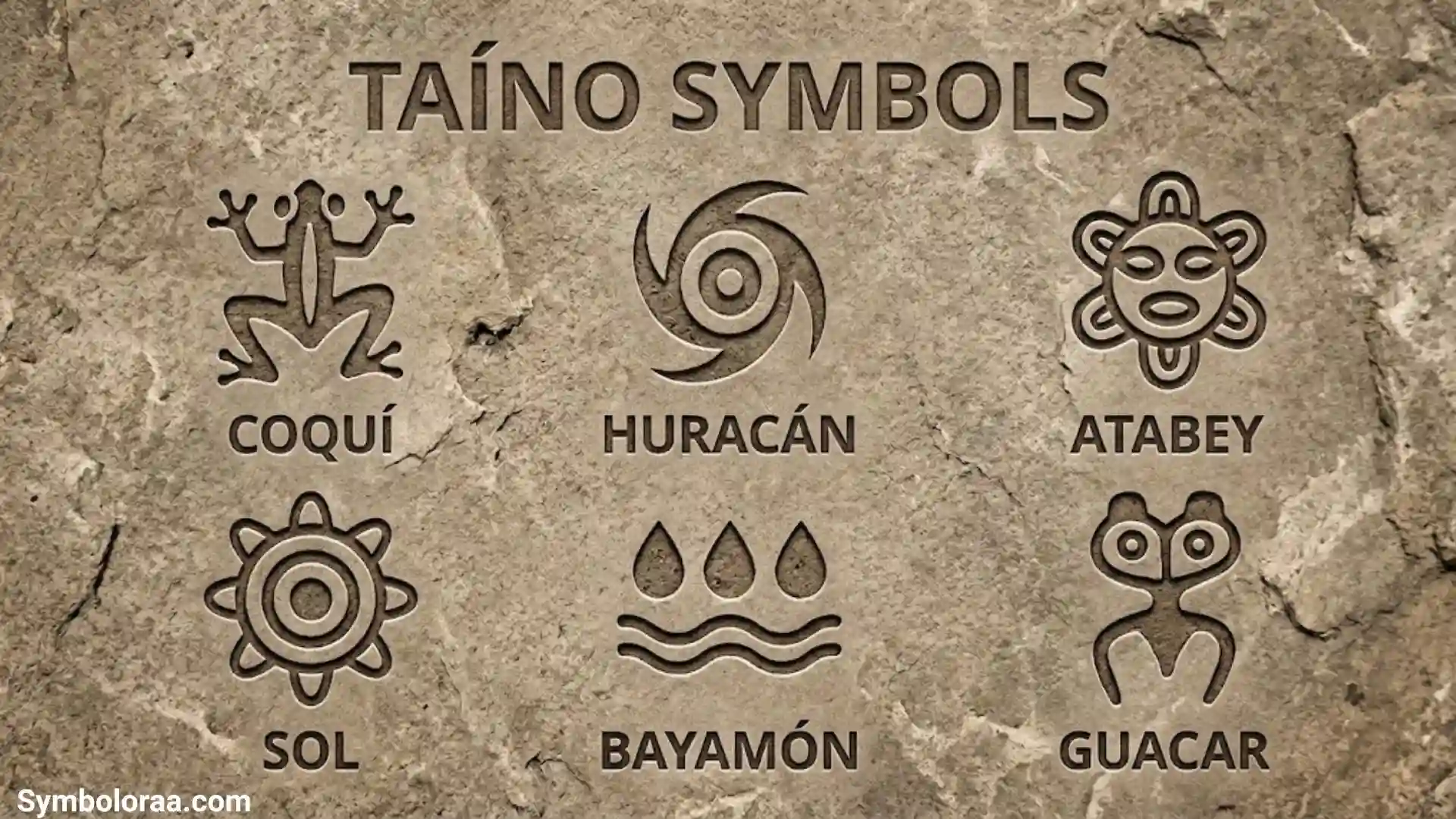
Taíno symbols offer a fascinating look into the history, beliefs, and artistic traditions of the Indigenous people of the Caribbean. These designs appear in ancient rock carvings, pottery, ceremonial objects, and modern artwork. Each image tells a story about nature, spirituality, protection, community, or everyday life.
From the powerful sun symbol to images associated with Taíno warriors, animals, and spiritual beings, these designs remain meaningful across Puerto Rico, the Dominican Republic, and Cuba. Many people also explore Taíno-inspired artwork to celebrate Caribbean heritage, create meaningful tattoos, or connect with their ancestral roots.
In this guide, you’ll discover popular Taíno symbols and their meanings, traditional names, regional connections, and tattoo ideas. You’ll also find a convenient collection of text symbols and decorative characters to copy and paste. One important distinction: ancient Taíno images are primarily visual motifs, so not every traditional design has an exact Unicode character or a universally agreed meaning.
Taíno Symbols and Meanings
Taíno symbols come from the visual culture of the Taíno, an Indigenous people whose communities historically lived across much of the Greater Antilles and nearby Caribbean islands. Their artistic traditions included petroglyphs, pictographs, pottery decorations, carved objects, and ceremonial sculptures.
Many designs represented relationships between people, the natural environment, and the spiritual world. However, their meanings aren’t always certain. Archaeologists interpret surviving images through their archaeological locations, associated objects, and historical evidence.
Here are some well-known Taíno-inspired motifs and their commonly discussed associations:
| Symbol or Motif | Commonly Associated Meaning |
| Sun | Light, warmth, life, and the natural world |
| Moon | Night, cycles, and celestial relationships |
| Frog | Nature, fertility, and Caribbean identity |
| Turtle | Water, longevity, and the natural environment |
| Bird | Flight, freedom, and the spiritual world |
| Spiral | Cycles, movement, and continuity |
| Human Face | Ancestors, spiritual beings, or human identity |
| Geometric Patterns | Decorative and potentially symbolic designs |
| Cemí Figure | Spiritual power and supernatural beings |
Cemí: Spiritual Figures and Sacred Objects
One of the most important concepts in Taíno spirituality is the cemí (also written zemí). The term refers to spiritual beings or powers and can also describe objects that represented or housed those powers.
Cemí figures could take different forms, including human-like faces, animals, or combinations of different features. Artisans carved these objects from wood, stone, bone, and other materials.
These objects weren’t simply decorative ornaments. They played important roles in Taíno ceremonial and spiritual life.
Sun and Moon Motifs
Celestial imagery is another popular part of modern Taíno-inspired artwork. Sun designs often represent warmth, energy, growth, and life. Moon imagery can suggest nighttime, natural cycles, and the passage of time.
These interpretations are useful for understanding contemporary designs, although individual ancient carvings don’t always have confirmed meanings.
Animal and Nature Symbols
Animals and natural elements appear throughout Caribbean Indigenous art. Common motifs include birds, frogs, turtles, fish, and other creatures associated with island environments.
Their meanings depend on the specific artwork and its historical context. Modern artists sometimes use these images to represent freedom, protection, fertility, family, and respect for nature.
Taíno Symbols and Names
Learning the names of Taíno symbols helps you understand their cultural background and identify different designs. Some names refer to spiritual concepts, while others describe recognizable figures or objects.
Here are several important Taíno-related names:
| Name | Description |
| Cemí (Zemí) | Spiritual being, power, or representation |
| Yúcahu | Important Taíno deity associated with cassava and agricultural fertility |
| Atabey | Female spiritual figure associated with waters and fertility |
| Guabancex | Powerful female spiritual figure associated with hurricanes |
| Boinayel | Spiritual figure associated with rain |
| Márohu | Figure associated with calm weather |
| Opiyelguobirán | A spiritual being described in historical accounts |
| Areíto | A ceremonial gathering involving music, dance, and storytelling |
These names come from historical and ethnographic records, especially accounts describing Taíno religion and society. Their spellings and interpretations can vary between sources.
Cemí is particularly important because it connects many different types of Taíno spiritual imagery. A carved face, stone figure, or ceremonial object might represent a cemí, but not every face-shaped design should automatically receive that label.
You may also encounter the terms Batey, referring to an important communal or ceremonial space, and duho, referring to a ceremonial seat associated with Taíno leaders and important individuals.
Understanding these names provides more cultural context than simply choosing a design because it looks attractive.
Taíno Symbols Copy and Paste

Many people search for Taíno symbols they can copy and paste into social media bios, captions, usernames, messages, and decorative text.
There is one important limitation: traditional Taíno petroglyphs and carvings aren’t available as a complete standardized Unicode symbol collection. The characters below are Unicode symbols that can complement Taíno-inspired text, but they aren’t authentic ancient Taíno glyphs.
Sun and Celestial Symbols
| Symbol | Unicode Name | Copy |
| ☀ | Sun | ☀ |
| ☼ | White Sun With Rays | ☼ |
| ◉ | Fisheye | ◉ |
| ◌ | Dotted Circle | ◌ |
| ☾ | Last Quarter Moon | ☾ |
| ☽ | First Quarter Moon | ☽ |
| ✧ | White Four Pointed Star | ✧ |
| ✦ | Black Four Pointed Star | ✦ |
Nature and Decorative Symbols
| Symbol | Common Name | Copy |
| ❋ | Decorative Floral Symbol | ❋ |
| ❖ | Black Diamond Minus White X | ❖ |
| ◈ | White Diamond Containing Black Small Diamond | ◈ |
| ◆ | Black Diamond | ◆ |
| ◇ | White Diamond | ◇ |
| ❂ | Circled Open Centre Eight Pointed Star | ❂ |
| ✺ | Eight Spoked Asterisk | ✺ |
| ❀ | Flower | ❀ |
| ♧ | Shamrock | ♧ |
| ♡ | White Heart Suit | ♡ |
Decorative Text Combinations
You can combine these characters to create attractive text inspired by Caribbean nature and traditional geometric artwork.
- ☀ Taíno Heritage ☀
- ✧ Caribbean Roots ✧
- ◈ Borikén Pride ◈
- ☽ Island Spirit ☾
- ❖ Ancestral Connection ❖
- ☀ Nature and Life ☀
Tip: Copy a character by selecting it and pressing Ctrl + C on Windows or Command + C on Mac. Paste it into your preferred app using Ctrl + V or Command + V.
Remember that decorative Unicode characters are not substitutes for historically documented Taíno artwork. If you want an authentic petroglyph, use a verified illustration rather than assuming a text character represents an ancient design.
Taíno Symbols Tattoos
Taíno tattoos have become a popular way to express cultural identity, ancestral connections, and appreciation for Caribbean history. Their bold shapes and geometric details also make them visually striking.
Traditional Taíno-inspired designs often feature faces, spirals, three-pointed figures, animals, and celestial imagery. Some tattoo designs reproduce documented archaeological artwork, while others are modern interpretations.
Popular Taíno Tattoo Designs
Here are some designs worth exploring:
- Cemí Tattoo: A design inspired by sacred spiritual figures. It can represent ancestral connections and Indigenous spirituality.
- Sun Tattoo: A modern interpretation of celestial imagery, often associated with life, warmth, and energy.
- Spiral Tattoo: A flowing geometric design that can represent continuity, movement, or personal growth.
- Frog Tattoo: An animal-inspired design connected with Caribbean nature and contemporary island identity.
- Three-Pointed Stone Tattoo: Inspired by archaeological trigonolitos associated with Taíno spiritual practices and agriculture.
- Human Face Tattoo: A design based on ancient carved faces, potentially representing spiritual beings or ancestors.
Where to Place a Taíno Tattoo
Your preferred placement depends on the size and complexity of the design.
| Tattoo Placement | Suitable Design |
| Forearm | Geometric patterns and small petroglyphs |
| Upper Arm | Large cemí-inspired figures |
| Shoulder | Circular and sun-inspired designs |
| Back | Large traditional-inspired compositions |
| Chest | Symmetrical geometric artwork |
| Wrist | Small spirals and minimalist motifs |
| Calf | Elongated figures and decorative patterns |
Before getting a tattoo, research the original design and its documented background. Some images represent sacred spiritual figures rather than ordinary decoration. A knowledgeable tattoo artist can help preserve their distinctive details without inventing historical meanings.
Taíno Symbols Puerto Rico
Puerto Rico has a particularly visible connection to Taíno history. The island was known as Borikén or Boriquén in Taíno tradition, and archaeological sites preserve evidence of Indigenous communities and their artistic practices.
One of the most important locations is Caguana Indigenous Ceremonial Park in Utuado, Puerto Rico. Its ceremonial plazas contain stone carvings associated with Taíno religious and cultural traditions.
Popular Puerto Rican Taíno-inspired designs include:
- Cemí Figures: Sacred representations associated with spiritual beings.
- Three-Pointed Stones: Archaeological objects connected with Yúcahu and agricultural fertility.
- Human-Face Carvings: Petroglyphs featuring eyes, mouths, and distinctive facial shapes.
- Animal Figures: Images inspired by creatures found in Caribbean environments.
- Geometric Patterns: Repeating lines, curves, and shapes found in Indigenous-inspired artwork.
Puerto Rican artists and cultural organizations continue to incorporate these visual traditions into jewelry, paintings, clothing, sculptures, and tattoos.
The connection isn’t limited to ancient objects. Contemporary Taíno descendants and cultural communities continue to explore and share their Indigenous heritage.
Puerto Rican Taíno Symbols

Puerto Rican Taíno symbols are often recognized through their connection with Borikén, Indigenous archaeology, and the island’s surviving cultural traditions.
Some popular motifs include the following:
- Trigonolito: A three-pointed stone object associated with Taíno ceremonial life and agricultural fertility.
- Cemí Face: A carved representation associated with spiritual power.
- Spiral Motif: A recurring geometric form found in rock art and modern interpretations.
- Animal Motif: A design inspired by the animals and natural surroundings of the Caribbean.
- Human Figure: An artistic representation of people or spiritual beings.
These motifs frequently appear in modern expressions of Boricua identity. You’ll find similar designs on pendants, T-shirts, murals, handmade accessories, and decorative artwork.
However, not every geometric design marketed as Puerto Rican Taíno art comes from an excavated archaeological object. Some are contemporary creations inspired by historical patterns.
Warrior Fighter Taíno Symbols
Taíno warrior symbols attract people interested in strength, bravery, resistance, and the history of Indigenous Caribbean communities.
The Taíno had organized communities, political leaders, and systems of defense. Their leaders were known as caciques, while nitaínos belonged to an elite social group. Historical accounts also describe conflicts between communities and resistance against Spanish colonization.
Common Warrior-Inspired Designs
There isn’t one universally recognized ancient Taíno symbol that officially means warrior or fighter. However, modern artists often create warrior-inspired designs using historical visual elements.
| Design Element | Modern Interpretation |
| Cemí-Inspired Face | Spiritual strength and ancestral connection |
| Geometric Bands | Unity and cultural identity |
| Sharp Angular Patterns | Courage and determination |
| Three-Pointed Motifs | Indigenous heritage and spiritual associations |
| Human Figures | Community, leadership, and resistance |
| Circular Patterns | Continuity and connection |
Taíno Warrior Tattoo Ideas
If you’re interested in a warrior-inspired tattoo, consider combining a documented petroglyph with a modern geometric border.
You could also choose a larger composition featuring a human face, traditional-inspired lines, and a three-pointed motif.
The best approach is to distinguish historical Taíno objects from contemporary warrior artwork. This helps you appreciate the design without treating a modern interpretation as an authenticated ancient symbol.
Dominican Taíno Symbols
The Dominican Republic shares a deep Indigenous history with Puerto Rico because both islands were part of the Taíno cultural world. The island of Hispaniola, which the Dominican Republic shares with Haiti, was home to important Taíno communities before European colonization.
Taíno archaeological discoveries in the Dominican Republic include carved figures, ceremonial objects, pottery, stone sculptures, and petroglyphs.
Some recognizable motifs include:
- Cemí Sculptures: Spiritual figures made from stone, wood, bone, and other materials.
- Three-Pointed Stones: Objects associated with agricultural fertility and Yúcahu.
- Human Faces: Carved representations that may depict spiritual beings or ancestors.
- Animal Figures: Images inspired by creatures such as frogs, turtles, and birds.
- Geometric Carvings: Patterns made from lines, curves, circles, and repeated shapes.
The Dominican Republic has important archaeological collections that help researchers understand Taíno artistic traditions.
Dominican Taíno artwork also appears in modern cultural celebrations, handmade crafts, jewelry, and Indigenous heritage projects.
Puerto Rico Taíno Symbols and Meanings
Puerto Rican Taíno artwork includes several recognizable designs associated with spirituality, agriculture, nature, and community life.
Understanding their historical background can help you choose a meaningful design instead of relying on an assumed interpretation.
Important Puerto Rican Taíno Motifs
| Motif or Figure | Historical Association |
| Yúcahu | Cassava, agricultural fertility, and the sea |
| Atabey | Fertility and freshwater |
| Boinayel | Rain and agricultural nourishment |
| Guabancex | Hurricanes and powerful weather |
| Marohu | Calm weather and favorable conditions |
| Cemí | Spiritual beings and sacred power |
| Duho | Ceremonial authority and leadership |
Yúcahu and the Three-Pointed Stone
Yúcahu is one of the best-known figures in Taíno spirituality. His name is associated with cassava, an essential Caribbean food crop.
Three-pointed stone objects, known as trigonolitos, are frequently connected with Yúcahu. Some were placed in agricultural areas, while others served ceremonial purposes.
Atabey and Nature
Atabey is associated with fertility and freshwater. She holds an important position in Taíno spiritual traditions and appears in discussions of Indigenous Caribbean creation stories.
Boinayel and Rain
Boinayel is associated with rain, which supported agricultural production. Some traditional interpretations describe tears falling from the figure’s eyes as a representation of rain nourishing crops.
These historical associations help explain why modern artists use Taíno-inspired designs to express connections with land, water, agriculture, and ancestral traditions.
Puerto Rican Taíno Symbols Tattoo

A Puerto Rican Taíno tattoo can express pride in Borikén, appreciation for Indigenous history, or a personal connection with Caribbean ancestry.
Unlike generic tribal tattoos, historically inspired Taíno artwork can draw from recognizable archaeological objects and documented visual traditions.
Popular Tattoo Ideas for Boricua Heritage
1. Three-Pointed Cemí Design
This design takes inspiration from archaeological stone objects. It can represent a connection with Taíno spirituality and agricultural traditions.
2. Borikén-Inspired Tattoo
You can combine the name Borikén with a traditional-inspired geometric border. This creates a personal design celebrating Puerto Rican heritage.
3. Atabey-Inspired Artwork
A design inspired by Atabey can express appreciation for water, fertility, and the natural world.
4. Traditional Petroglyph Tattoo
Choose a documented carving from a Puerto Rican archaeological site. Preserve its original proportions and details rather than adding unrelated elements.
5. Caribbean Nature Tattoo
Combine an animal motif, flowing lines, and a natural element to create artwork inspired by the Caribbean environment.
How to Choose the Right Design
Before choosing a tattoo, ask yourself what you want it to represent. Do you want to celebrate family heritage, Indigenous history, spirituality, or a personal connection with Puerto Rico?
Then check the original design’s archaeological or cultural background. A tattoo inspired by a verified historical artifact carries a different context from a contemporary decorative interpretation.
If you’re unsure about a sacred figure, research its cultural significance before using it as body art.
Puerto Rican Taíno Symbols and Meanings
Puerto Rican Taíno symbols and meanings are closely connected with the island’s archaeological discoveries and Indigenous spiritual traditions.
However, many petroglyphs remain difficult to interpret. A carved face might represent a spiritual figure, an animal, a person, or something that researchers haven’t identified yet.
Here are additional motifs and objects worth recognizing:
| Taíno Design or Object | Description and Significance |
| Duho | Ceremonial seat associated with caciques and important individuals |
| Cohoba Tray | Ritual object used in spiritual ceremonies |
| Behique Figure | Representation associated with spiritual specialists and healers |
| Boinayel Figure | Associated with rain and agricultural fertility |
| Opiyelguobirán | Spiritual figure described with canine characteristics |
| Maraca | Musical instrument associated with ceremonial performances |
| Pottery Designs | Decorative patterns found on ceramic objects |
| Stone Petroglyphs | Images carved into natural rock surfaces |
What Makes These Symbols Different?
Some Taíno objects served practical purposes, while others had ceremonial or spiritual functions.
For example, a duho was a carved seat associated with important community figures. A cohoba tray, on the other hand, was connected with a ceremonial practice involving ritual substances.
These objects provide clues about Taíno society beyond the meanings of individual carvings.
Are All Taíno Symbols Religious?
No. Some objects and images had practical, decorative, political, or ceremonial purposes.
A pottery pattern might have decorated a household vessel. A carved figure might have represented spiritual power. A ceremonial seat could communicate social status.
Understanding these differences helps prevent every ancient design from being labeled a religious symbol.
Taíno Symbols Dominican Republic
The Dominican Republic preserves an important part of Taíno archaeological and cultural history. Its Indigenous heritage is especially connected with Hispaniola, the island that historically supported numerous Taíno communities.
One particularly interesting discovery is the collection of three-pointed stone objects associated with Taíno spirituality and agriculture.
Common Dominican Taíno Designs
- Trigonolitos: Three-pointed stone figures associated with agricultural fertility.
- Cemí Sculptures: Carved objects connected with spiritual forces.
- Human-Face Carvings: Designs featuring recognizable facial characteristics.
- Ceramic Patterns: Decorative artwork found on Indigenous pottery.
- Animal Representations: Figures inspired by Caribbean wildlife.
The Dominican Republic also has important archaeological collections that help researchers understand Taíno artistic traditions.
A particularly useful example is the Taíno material associated with Santiago de los Caballeros. Archaeological discoveries from this region demonstrate the importance of spiritual sculpture in the area.
Taíno Heritage in the Dominican Republic Today
Contemporary Dominican artists and cultural researchers continue to explore Indigenous imagery through paintings, sculpture, jewelry, and educational projects.
You may encounter Taíno-inspired patterns in souvenirs and decorative products. However, a modern design should not automatically be treated as an unchanged ancient artifact.
If you want an authentic historical reference, look for museum collections, archaeological documentation, and carefully researched reproductions.
Taíno Symbols Sun
The sun is one of the most recognizable themes in Taíno-inspired artwork. It represents a natural force that supports life, provides warmth, and influences the environment.
Sun imagery also appears in discussions of Taíno mythology and traditional stories about the relationship between celestial bodies, caves, and the natural world.
Sun-Related Taíno Figures and Motifs
The sun’s historical associations are worth understanding before choosing a design.
- Marohu: A spiritual figure associated with calm weather and favorable conditions.
- Mautiatibuel: A figure described in traditional accounts through stories involving the sun, moon, and caves.
- Sun-Face Designs: Modern interpretations featuring a central face surrounded by rays.
- Circular Sun Patterns: Contemporary artwork using circles and radiating geometric lines.
Taíno Sun Tattoo Ideas
A Taíno-inspired sun tattoo can feature a circular face, geometric rays, or a combination of curved and angular lines.
Popular placements include the shoulder, forearm, upper back, and chest. Smaller sun designs also work well as minimalist tattoos.
Sun Symbols You Can Copy and Paste
If you want a simple sun-inspired character for your social media profile, try these Unicode symbols:
- ☀ — Sun
- ☼ — White Sun With Rays
- ✺ — Eight-Spoked Asterisk
- ❂ — Circled Open-Centre Eight-Pointed Star
- ◉ — Fisheye
- ✧ — White Four-Pointed Star
These are standard decorative Unicode characters, not original Taíno petroglyphs. Their appearance can vary slightly between fonts and devices.
Cuban Taíno Symbols
Cuba also has a significant Indigenous Caribbean heritage. Before Spanish colonization, different Indigenous communities lived across the island, including groups connected with the broader Taíno cultural world.
Cuban archaeological sites preserve evidence of Indigenous pottery, rock carvings, ceremonial objects, and other forms of material culture.
Common Cuban Taíno-Inspired Motifs
| Motif | Common Interpretation |
| Human Faces | People, ancestors, or spiritual figures |
| Animal Figures | Connections with the natural environment |
| Spirals | Movement and geometric decoration |
| Circular Patterns | Repeated forms and visual balance |
| Cemí Figures | Spiritual beings and sacred objects |
| Pottery Designs | Indigenous craftsmanship and decoration |
The exact meaning of many Cuban rock carvings remains uncertain. Researchers study their location, archaeological layers, associated artifacts, and similarities with artwork from neighboring Caribbean islands.
Cuban Taíno Artwork and Cultural Identity
Cuban Indigenous heritage is sometimes overlooked when people discuss Taíno symbols. However, the island forms an important part of the wider Caribbean archaeological landscape.
Taíno-inspired designs appear in contemporary Cuban artwork, cultural exhibitions, educational materials, and heritage discussions.
Some artists use traditional-looking faces and geometric motifs to express Indigenous ancestry and Caribbean identity. Others create modern compositions inspired by archaeological discoveries.
If you’re searching for Cuban Taíno symbols for a tattoo or artwork, try to find examples with documented Cuban archaeological origins. This will help you distinguish authentic historical references from general Caribbean-inspired designs.
Frequently Asked Questions About Taíno Symbols
What Is the Most Famous Taíno Symbol?
The cemí is among the best-known Taíno spiritual representations. Three-pointed stone figures are also recognizable examples of Taíno archaeological art. Both have important connections with Indigenous Caribbean spirituality.
What Does the Taíno Sun Symbol Mean?
Sun-inspired designs are commonly associated with light, warmth, energy, and life. However, the meaning of individual ancient carvings isn’t always confirmed by archaeological evidence.
Are Taíno Symbols From Puerto Rico and the Dominican Republic the Same?
Both islands share a connected Taíno cultural history. Many artistic traditions and spiritual concepts appear across the region, although individual archaeological objects and regional designs can differ.
Can I Copy and Paste Authentic Taíno Symbols?
Most traditional Taíno petroglyphs don’t have dedicated Unicode characters. You can copy decorative Unicode symbols such as ☀, ☼, ◈, and ✧, but these aren’t authentic ancient Taíno glyphs. For historical designs, use verified artwork or illustrations.
What Does a Taíno Warrior Tattoo Represent?
A modern Taíno-inspired warrior tattoo can represent courage, resistance, strength, cultural pride, and ancestral connections. These are contemporary interpretations rather than universally established meanings of specific ancient symbols.
Conclusion
Taíno symbols preserve an important part of Caribbean Indigenous history. From cemí figures and three-pointed stones to animal carvings and geometric patterns, these designs offer fascinating insights into traditional spirituality, craftsmanship, and everyday life.
Puerto Rico, the Dominican Republic, and Cuba all contribute to the wider story of Taíno heritage. Their archaeological discoveries and contemporary cultural expressions help keep Indigenous traditions visible across the Caribbean.
When choosing a Taíno symbol for a tattoo, decorative project, or social media profile, take time to understand its background. Choose documented designs when historical accuracy matters, and enjoy modern interpretations while respecting their cultural significance.

I’m Madison Reed, a contemporary American author who writes about love, family, friendship, and second chances. I’m fascinated by the choices that shape our lives and the moments that change us forever. My goal is to create honest, emotional stories with characters readers can connect with long after finishing each book.
Three Books:
When We Find Our Way
The Things We Never Said
Summer in September