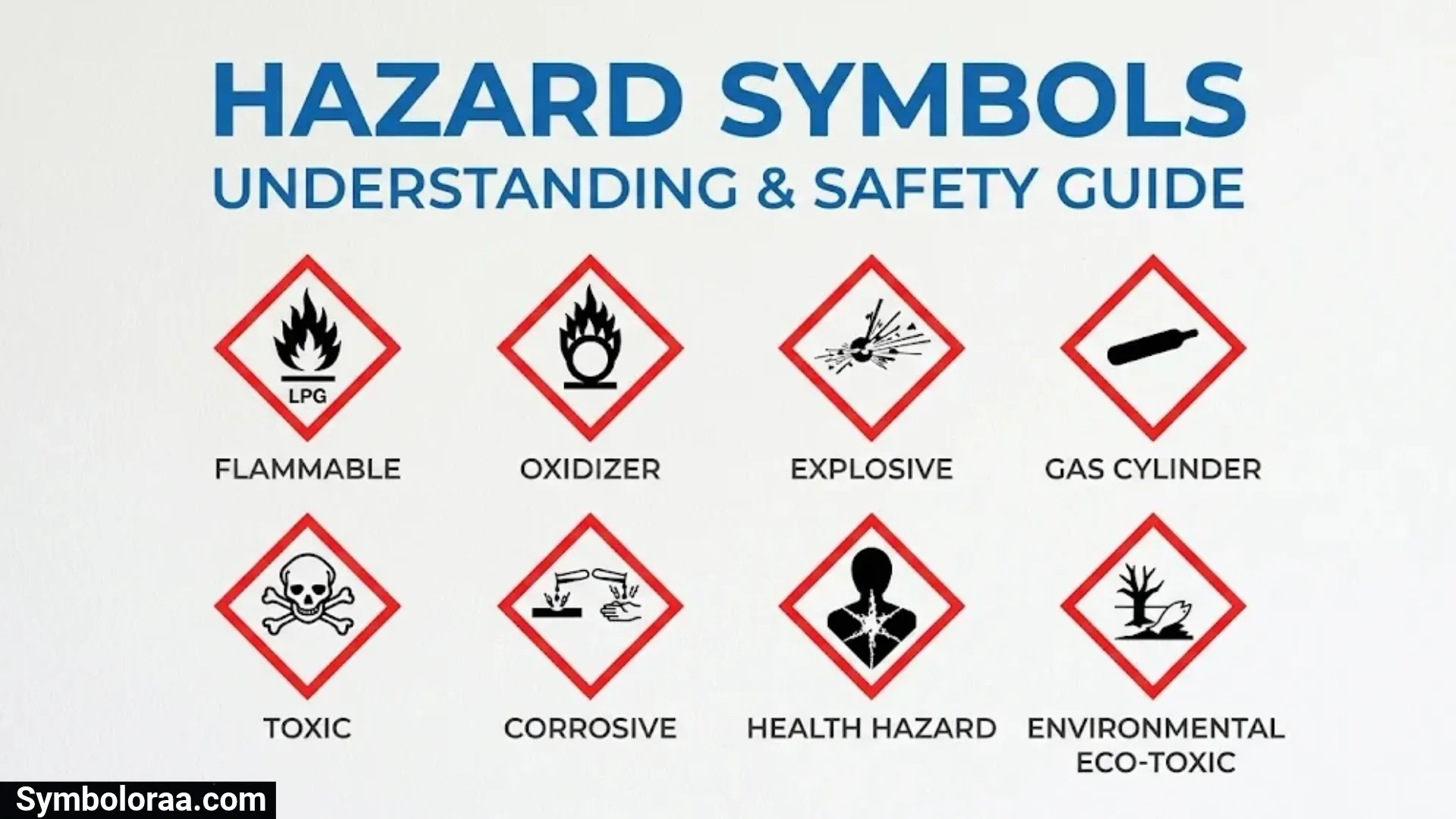
Hazard symbols help you recognize dangerous substances before they cause harm. You can find these warning signs on chemical containers, cleaning products, industrial materials, laboratory supplies, and workplace safety labels. Each symbol communicates a specific type of risk and helps people handle hazardous materials more carefully.
Understanding hazard symbols is important whether you work in a laboratory, factory, warehouse, construction site, or healthcare facility. Even everyday products can contain chemicals that cause burns, poisoning, fires, or environmental damage when handled incorrectly.
Most chemical warning symbols follow the Globally Harmonized System of Classification and Labelling of Chemicals (GHS). This international framework uses standardized pictograms to communicate chemical hazards across different countries and industries.
In this guide, you’ll learn what hazard symbols mean, how to recognize the nine GHS pictograms, and how to understand chemical warning labels. You’ll also discover the differences between GHS symbols, OSHA hazard signs, NFPA labels, and transportation warning signs.
What Are Hazard Symbols?
Hazard symbols are standardized warning signs that identify substances, materials, equipment, or situations that may cause injury, illness, property damage, or environmental harm.
These symbols communicate risks through simple visual designs. Many use a black pictogram inside a red diamond-shaped border with a white background. This design makes the warning easier to recognize, even when someone cannot read the accompanying text.
For example, a flame symbol indicates a fire-related hazard. A skull and crossbones warns that a substance can cause serious poisoning. A corrosion symbol alerts you to chemicals that may damage skin, eyes, or metals.
Hazard warning signs serve several important purposes:
- Identify dangerous chemicals and materials.
- Warn workers about possible exposure risks.
- Help prevent fires, burns, and accidental poisoning.
- Support safe chemical storage and handling.
- Improve workplace safety and emergency response.
- Communicate risks across languages and industries.
- Reduce accidents involving hazardous substances.
You should never ignore a hazard pictogram just because a product looks familiar. A clear liquid or ordinary-looking powder can still cause serious harm.
What Is the GHS Hazard Symbols System?
The Globally Harmonized System (GHS) is an international framework developed under the United Nations. It standardizes how chemicals are classified and how their hazards appear on labels and safety data sheets.
Before GHS became widely adopted, countries often used different chemical warning systems. A chemical could carry one warning in one country and a different warning somewhere else. This created confusion for manufacturers, workers, transporters, and emergency responders.
GHS addresses this problem by providing a consistent approach to chemical hazard communication.
The system includes three main elements:
- Hazard classification: Identifies the physical, health, and environmental dangers of a chemical.
- Chemical labeling: Communicates important warnings through pictograms, signal words, and statements.
- Safety Data Sheets (SDS): Provide detailed information about chemical risks, handling, storage, first aid, and emergency procedures.
GHS uses nine internationally recognized hazard pictograms. However, national regulations determine which pictograms must appear on specific products.
In the United States, OSHA’s Hazard Communication Standard adopts most GHS pictograms for workplace chemical labeling. OSHA requires eight pictograms under its standard. The environmental hazard pictogram is not required because environmental hazards fall outside OSHA’s jurisdiction.
Nine GHS Hazard Symbols and Their Meanings
The nine GHS pictograms communicate different types of chemical hazards. Each symbol represents one or more hazard classes.
Here is a quick overview of all nine GHS hazard symbols and their meanings.
| GHS Code | Hazard Symbol Name | Main Meaning |
| GHS01 | Exploding Bomb | Explosive or highly reactive substances |
| GHS02 | Flame | Flammable and self-reactive materials |
| GHS03 | Flame Over Circle | Oxidizing substances |
| GHS04 | Gas Cylinder | Gases under pressure |
| GHS05 | Corrosion | Skin burns, eye damage, and metal corrosion |
| GHS06 | Skull and Crossbones | Acute toxicity and poisoning |
| GHS07 | Exclamation Mark | Irritation and harmful effects |
| GHS08 | Health Hazard | Serious or long-term health effects |
| GHS09 | Environment | Hazardous effects on aquatic life |
Let’s examine each chemical hazard symbol in detail.
Exploding Bomb Symbol (GHS01)
The exploding bomb hazard symbol warns that a substance may explode under certain conditions. These materials can react violently when exposed to heat, flames, impact, friction, or other sources of energy.
The pictogram shows a black exploding object with fragments spreading outward. It appears inside a red diamond-shaped border.
What Does the Exploding Bomb Symbol Mean?
This symbol identifies certain explosive and highly reactive substances. It can also appear on products containing specific self-reactive chemicals or organic peroxides.
Depending on their classification, these materials may:
- Explode when heated.
- Detonate after impact or friction.
- React violently under certain conditions.
- Produce dangerous pressure or heat.
- Cause fires, injuries, or structural damage.
Examples of Explosive Materials
Examples may include:
- Certain industrial explosives.
- Some unstable chemical compounds.
- Specific organic peroxides.
- Certain self-reactive substances.
- Explosive mixtures used in specialized industrial applications.
Not every reactive chemical carries this pictogram. The classification depends on its tested properties and the applicable GHS criteria.
Safety Precautions
If you see the exploding bomb symbol:
- Keep the substance away from heat and ignition sources.
- Avoid dropping, shaking, or striking the container.
- Follow the manufacturer’s handling instructions.
- Use the required protective equipment.
- Store the material under its specified conditions.
- Keep unauthorized people away from the storage area.
Never experiment with a chemical carrying this warning. Even a small amount can create a serious hazard.
Flame Symbol (GHS02)
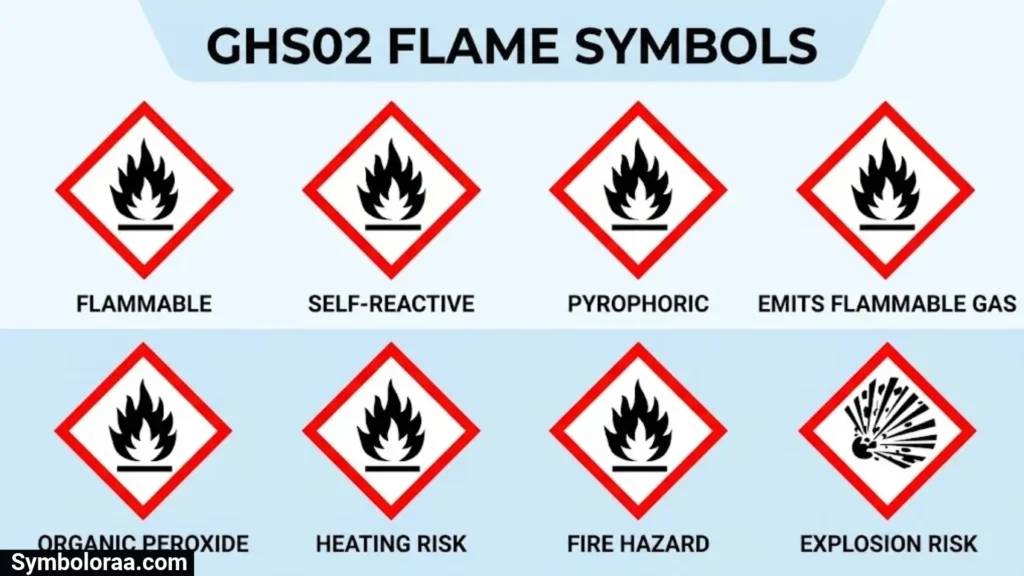
The flame hazard symbol indicates that a substance can catch fire easily. It is one of the most recognizable chemical warning symbols.
The pictogram shows a black flame inside a red diamond. It commonly appears on flammable liquids, gases, solids, and certain reactive chemicals.
What Does the Flame Symbol Mean?
The flame pictogram covers several types of fire-related hazards, including:
- Flammable gases.
- Flammable liquids.
- Flammable solids.
- Pyrophoric liquids and solids.
- Self-heating substances.
- Substances that release flammable gases when they contact water.
- Certain self-reactive substances.
- Certain organic peroxides.
A flammable substance can ignite when it encounters a spark, open flame, hot surface, or another ignition source.
Common Examples
You may find the flame symbol on products such as:
- Gasoline.
- Certain solvents.
- Alcohol-based industrial products.
- Aerosol products.
- Some adhesives and paints.
- Certain fuel gases.
The exact classification depends on the chemical’s properties. Not every product in these general categories carries the same warning.
Safety Precautions
Follow these precautions when handling flammable materials:
- Keep them away from open flames and sparks.
- Avoid smoking near the storage area.
- Use suitable ventilation.
- Store containers according to their safety instructions.
- Keep lids closed when products are not in use.
- Use approved equipment where flammable vapors may be present.
Remember that some flammable liquids release vapors that can travel away from the container. Those vapors may ignite when they reach an ignition source.
Flame Over Circle Symbol (GHS03)
The flame over circle symbol identifies oxidizing substances. These chemicals can cause or intensify fires by supporting combustion.
The pictogram shows a black flame above a black circle. It appears inside the standard red diamond border.
What Does the Oxidizing Symbol Mean?
Oxidizers may release oxygen or support combustion through chemical reactions. They can make other materials burn faster or more intensely.
An oxidizing substance does not always burn by itself. However, it can increase the danger when it comes into contact with combustible materials.
Examples of Oxidizing Substances
Common examples include:
- Certain concentrated hydrogen peroxide products.
- Potassium permanganate.
- Some nitrate compounds.
- Certain chlorates and perchlorates.
- Industrial oxygen-releasing chemicals.
These substances have different properties and require different handling procedures.
Safety Precautions
When you see the oxidizer warning:
- Keep the chemical away from combustible materials.
- Avoid mixing it with incompatible substances.
- Store it according to the safety data sheet.
- Prevent contamination with oils, paper, cloth, or other materials.
- Use suitable protective equipment.
- Follow workplace procedures for spills and disposal.
Never assume an oxidizer is safe simply because it does not have a flame symbol. Oxidizing substances can make an existing fire much more dangerous.
Gas Cylinder Symbol (GHS04)
The gas cylinder hazard symbol warns that a container holds gas under pressure. The gas may be compressed, liquefied, refrigerated, or dissolved.
The pictogram shows a horizontal black gas cylinder inside a red diamond.
What Does the Gas Cylinder Symbol Mean?
Gas containers can create several types of hazards. Their contents may be extremely cold, flammable, toxic, or capable of causing suffocation.
A pressurized container may also rupture when exposed to excessive heat or physical damage.
The GHS gas cylinder pictogram is associated with gases under pressure, including:
- Compressed gases.
- Liquefied gases.
- Refrigerated liquefied gases.
- Dissolved gases.
Examples of Products
You may find this symbol on:
- Industrial oxygen cylinders.
- Carbon dioxide cylinders.
- Nitrogen gas containers.
- Helium cylinders.
- Refrigerant containers.
- Other pressurized industrial gases.
The pictogram identifies pressure-related hazards. Additional label information explains other risks associated with the gas.
Safety Precautions
Follow these basic precautions:
- Secure cylinders to prevent them from falling.
- Keep them away from excessive heat.
- Use the correct regulator and fittings.
- Protect valves from damage.
- Store cylinders in approved areas.
- Follow instructions for ventilation and gas-specific handling.
A leaking gas cylinder can create a serious emergency. Follow your workplace emergency procedures rather than attempting an unfamiliar repair.
Corrosion Symbol (GHS05)
The corrosion hazard symbol warns about chemicals that can cause severe skin burns, serious eye damage, or corrosion of metals.
The pictogram shows liquid dripping from test tubes onto a hand and a metal surface.
This symbol is especially important because corrosive chemicals can cause permanent injuries after contact.
What Does the Corrosion Symbol Mean?
Corrosive substances can damage living tissue or chemically attack certain metals.
Common hazards include:
- Severe skin burns.
- Serious eye damage.
- Corrosion of metal surfaces.
- Damage to equipment and containers.
Some corrosive chemicals can cause injuries within a short exposure period.
Examples of Corrosive Chemicals
Common examples include:
- Hydrochloric acid.
- Sulfuric acid.
- Sodium hydroxide.
- Potassium hydroxide.
- Certain industrial cleaning chemicals.
- Some concentrated acidic and alkaline products.
The severity depends on the chemical, concentration, exposure time, and contact conditions.
Safety Precautions
When handling corrosive materials:
- Wear chemical-resistant gloves.
- Use suitable eye and face protection.
- Follow the recommended protective clothing requirements.
- Avoid direct contact with skin and eyes.
- Use proper ventilation when necessary.
- Store incompatible chemicals separately.
- Follow the product’s spill and first-aid instructions.
If a corrosive chemical contacts your skin or eyes, follow the SDS first-aid instructions immediately. Do not delay emergency care.
Skull and Crossbones Symbol (GHS06)
The skull and crossbones hazard symbol is one of the clearest warnings of serious chemical danger. It indicates acute toxicity that can cause severe poisoning or death after certain exposure routes.
The pictogram shows a black skull above two crossed bones. It appears inside a red diamond.
What Does the Skull and Crossbones Symbol Mean?
This symbol identifies chemicals classified for severe acute toxicity. Exposure may occur through:
- Swallowing.
- Skin contact.
- Inhalation.
The exact warning depends on the substance’s toxicity classification and exposure route.
A small quantity of a highly toxic chemical can cause serious health effects. However, the symbol alone does not tell you the exact amount that may cause harm.
Examples of Highly Toxic Substances
Depending on their classification, examples may include:
- Certain cyanide compounds.
- Some highly toxic pesticides.
- Specific industrial chemicals.
- Certain laboratory reagents.
- Other substances with severe acute toxicity.
Never judge a chemical’s danger by its smell, color, or appearance.
Safety Precautions
If a product carries the skull and crossbones symbol:
- Avoid unnecessary exposure.
- Never taste or directly smell the substance.
- Use the required protective equipment.
- Follow ventilation requirements.
- Keep it away from children and unauthorized users.
- Store it securely.
- Follow emergency instructions in case of exposure.
If poisoning is suspected, seek emergency medical assistance and provide the product label or safety data sheet when possible.
Exclamation Mark Symbol (GHS07)
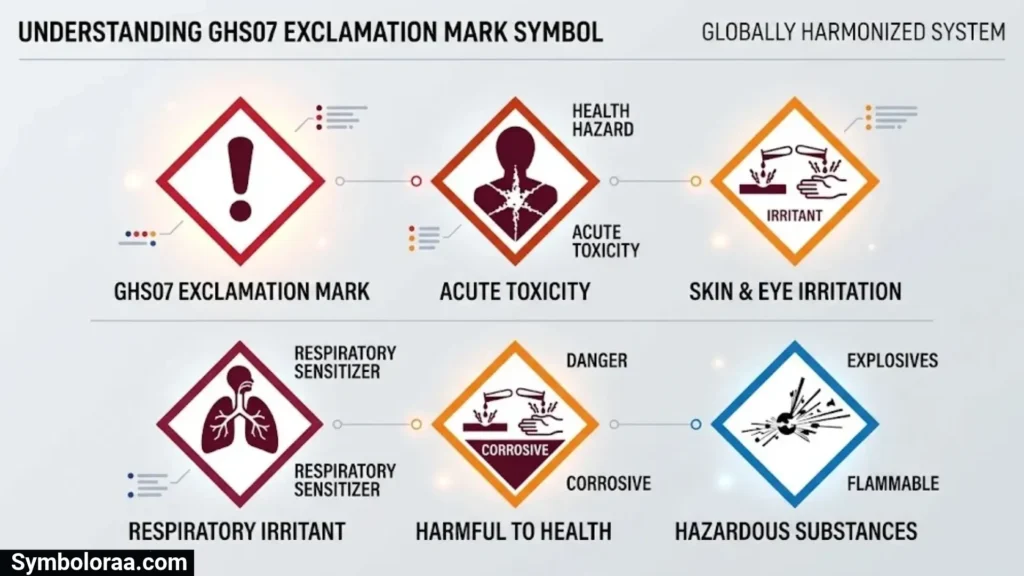
The exclamation mark hazard symbol identifies chemicals that can cause harmful or irritating effects. It often appears on products that present less severe acute toxicity or certain other health hazards.
The pictogram shows a black exclamation mark inside a red diamond.
What Does the Exclamation Mark Symbol Mean?
This symbol may indicate:
- Skin irritation.
- Eye irritation.
- Skin sensitization.
- Harmful acute toxicity.
- Respiratory tract irritation.
- Drowsiness or dizziness.
- Certain other harmful effects.
The exact hazard depends on the chemical’s classification.
Examples of Products
You may find the exclamation mark on:
- Certain household cleaning products.
- Some solvents.
- Certain detergents.
- Some adhesives.
- Specific paints and coatings.
- Certain laboratory chemicals.
A product carrying this symbol may still require careful handling. The warning does not mean the chemical is harmless.
Safety Precautions
- Avoid direct skin and eye contact.
- Use gloves when required.
- Follow ventilation instructions.
- Wash exposed skin as directed.
- Avoid breathing vapors, mists, or dust.
- Keep the product away from children.
- Read the precautionary statements before use.
If you experience irritation, dizziness, or another unexpected reaction, stop exposure and follow the product’s safety instructions.
Health Hazard Symbol (GHS08)
The health hazard symbol identifies substances that may cause serious or long-term health effects. It shows a black human silhouette with a star-shaped mark across the chest.
Unlike some warning signs that focus on immediate injury, this pictogram often highlights risks that may develop after repeated or prolonged exposure.
What Does the Health Hazard Symbol Mean?
The health hazard pictogram may identify chemicals associated with:
- Carcinogenicity.
- Germ cell mutagenicity.
- Reproductive toxicity.
- Respiratory sensitization.
- Specific target organ toxicity.
- Aspiration toxicity.
These hazards can affect different parts of the body and may require specialized precautions.
Examples of Health Hazards
Depending on their classification, products may carry this symbol when they contain substances associated with:
- Certain cancers.
- Genetic damage.
- Harm to fertility or an unborn child.
- Allergic respiratory reactions.
- Damage to organs after exposure.
- Serious effects from aspiration into the lungs.
Not every chemical that causes irritation carries this symbol. It generally identifies more serious health classifications.
Safety Precautions
- Read the hazard and precautionary statements carefully.
- Avoid repeated or prolonged exposure.
- Use appropriate protective equipment.
- Follow workplace exposure controls.
- Use suitable ventilation or respiratory protection when required.
- Follow safe storage and disposal procedures.
- Obtain relevant safety training before handling the chemical.
Long-term chemical exposure can be difficult to recognize because symptoms may not appear immediately. Good exposure control helps reduce that risk.
Environmental Hazard Symbol (GHS09)
The environmental hazard symbol warns that a chemical can harm the environment, especially aquatic organisms.
The pictogram shows a dead tree and a dead fish inside a red diamond.
What Does the Environmental Hazard Symbol Mean?
This symbol primarily identifies substances that are hazardous to aquatic environments. Depending on the classification, the chemical may cause:
- Harm to fish.
- Damage to aquatic invertebrates.
- Toxic effects on aquatic plants.
- Long-lasting environmental damage.
- Harmful effects after repeated exposure.
Some chemicals remain in the environment for extended periods. Others may affect aquatic life even at relatively low concentrations.
Examples of Environmental Hazards
Examples may include:
- Certain pesticides.
- Some industrial chemicals.
- Specific metal compounds.
- Certain biocidal substances.
- Chemicals classified as hazardous to aquatic organisms.
Safety Precautions
- Prevent chemicals from entering drains.
- Avoid releasing substances into soil or waterways.
- Use suitable spill containment procedures.
- Store hazardous waste in approved containers.
- Follow local disposal regulations.
- Report accidental environmental releases according to workplace procedures.
The environmental pictogram is part of the international GHS system. However, OSHA does not require it under the US Hazard Communication Standard because environmental hazards are outside OSHA’s jurisdiction.
Three Main Categories of Hazard Symbols
GHS organizes chemical hazards into three broad groups: physical hazards, health hazards, and environmental hazards.
Understanding these categories makes it easier to recognize what type of danger a chemical may present.
| Hazard Category | What It Covers | Examples |
| Physical hazards | Fire, explosion, pressure, and chemical reactions | Flammable liquids, explosives, oxidizers, gases under pressure |
| Health hazards | Harmful effects on the human body | Toxicity, burns, irritation, cancer, organ damage |
| Environmental hazards | Damage to aquatic organisms and ecosystems | Aquatic toxicity and long-lasting environmental harm |
Physical Hazard Symbols
Physical hazard symbols warn about dangerous chemical properties that can cause fires, explosions, pressure-related accidents, or violent reactions.
Common physical hazard classes include:
- Explosives.
- Flammable gases.
- Flammable liquids.
- Flammable solids.
- Oxidizing gases.
- Oxidizing liquids.
- Oxidizing solids.
- Gases under pressure.
- Self-reactive substances.
- Pyrophoric liquids and solids.
- Self-heating substances.
- Substances that emit flammable gases when in contact with water.
- Organic peroxides.
- Corrosive to metals.
The exact classes and categories depend on the GHS edition and the national rules that implement it.
Health Hazard Symbols
Health hazard symbols communicate risks that may affect the skin, eyes, lungs, organs, or other body systems.
Important health hazard classifications include:
- Acute toxicity.
- Skin corrosion and irritation.
- Serious eye damage and eye irritation.
- Respiratory sensitization.
- Skin sensitization.
- Germ cell mutagenicity.
- Carcinogenicity.
- Reproductive toxicity.
- Specific target organ toxicity.
- Aspiration hazard.
Some health effects happen immediately. Others may develop after repeated exposure or over a longer period.
Environmental Hazard Symbols
Environmental hazard symbols warn about chemical effects on ecosystems and aquatic life.
These hazards may involve:
- Acute aquatic toxicity.
- Chronic aquatic toxicity.
- Harm to fish and other aquatic organisms.
- Persistent chemical contamination.
- Long-term environmental damage.
Always follow the disposal instructions for hazardous chemicals. Pouring chemicals down a drain can create environmental risks and may violate local requirements.
How to Read a GHS Chemical Hazard Label
A GHS chemical label provides more information than a pictogram alone. It combines several elements to explain the chemical’s identity, risks, and recommended precautions.
A standard shipped-container label under OSHA’s Hazard Communication Standard generally includes the following elements.
| Label Element | Purpose |
| Product identifier | Identifies the chemical or mixture |
| Signal word | Indicates the relative severity of the hazard |
| Hazard statements | Describe the nature of the hazard |
| Pictograms | Show the main hazard types |
| Precautionary statements | Explain how to prevent or respond to exposure |
| Supplier information | Identifies the manufacturer, importer, or responsible supplier |
Product Identifier
The product identifier tells you which chemical or mixture is inside the container. It may include a chemical name, product name, or identification number.
Always check this information before using a substance.
Signal Words
GHS uses two main signal words:
- Danger: Used for more severe hazard categories.
- Warning: Used for less severe hazard categories.
A label generally uses only one signal word, even when the product has multiple classified hazards.
Some products may not require either signal word depending on their classification.
Hazard Statements
Hazard statements describe the type and severity of the danger.
Examples include:
- Highly flammable liquid and vapor.
- Causes severe skin burns and eye damage.
- May cause cancer.
- Fatal if inhaled.
- May cause an allergic skin reaction.
These statements help you understand what could happen if you are exposed to the chemical.
Precautionary Statements
Precautionary statements explain how to reduce the risk.
They may provide instructions about:
- Prevention.
- Safe handling.
- Storage.
- Personal protective equipment.
- First aid.
- Spill response.
- Disposal.
Read these instructions before opening or using a hazardous product.
Supplier Identification
Supplier information helps you identify the company responsible for the product. It may include the manufacturer’s or importer’s name, address, and telephone number.
This information can be important when you need additional safety details or emergency assistance.
What Is a Safety Data Sheet (SDS)?
A Safety Data Sheet (SDS) is a document that provides detailed information about a chemical’s hazards and safe use.
It helps workers, supervisors, emergency responders, and safety professionals understand the risks associated with a substance.
An SDS contains 16 standardized sections.
| SDS Section | Information Provided |
| 1. Identification | Product name, recommended use, and supplier details |
| 2. Hazard Identification | Classification, pictograms, signal words, and hazard statements |
| 3. Composition | Chemical ingredients and relevant concentrations |
| 4. First-Aid Measures | Instructions for exposure and poisoning emergencies |
| 5. Fire-Fighting Measures | Suitable extinguishing methods and fire hazards |
| 6. Accidental Release Measures | Spill cleanup and containment instructions |
| 7. Handling and Storage | Safe use, handling, and storage requirements |
| 8. Exposure Controls | Exposure limits and protective equipment |
| 9. Physical and Chemical Properties | Appearance, odor, pH, flash point, and other properties |
| 10. Stability and Reactivity | Chemical stability and incompatible materials |
| 11. Toxicological Information | Health effects and exposure information |
| 12. Ecological Information | Environmental effects |
| 13. Disposal Considerations | Waste treatment and disposal information |
| 14. Transport Information | Transportation classifications and requirements |
| 15. Regulatory Information | Relevant safety and chemical regulations |
| 16. Other Information | Revision date and additional details |
Under OSHA’s Hazard Communication Standard, Sections 1–11 and 16 are mandatory for SDS compliance. Sections 12–15 are standardized in the GHS format, but OSHA does not enforce their content under that standard.
Difference Between Hazard Labels and SDS
A chemical label gives you a quick warning. An SDS provides more detailed safety information.
| Feature | Chemical Label | Safety Data Sheet |
| Main purpose | Quick hazard communication | Detailed chemical safety information |
| Format | Printed on the container | Separate document |
| Pictograms | Commonly included when required | Included in hazard identification |
| First-aid details | Brief precautionary instructions | Detailed first-aid guidance |
| Storage instructions | Short precautions | More detailed storage information |
| Emergency response | Limited guidance | Detailed spill and fire information |
You should read both the label and SDS before working with an unfamiliar hazardous chemical.
OSHA Hazard Symbols and the Hazard Communication Standard
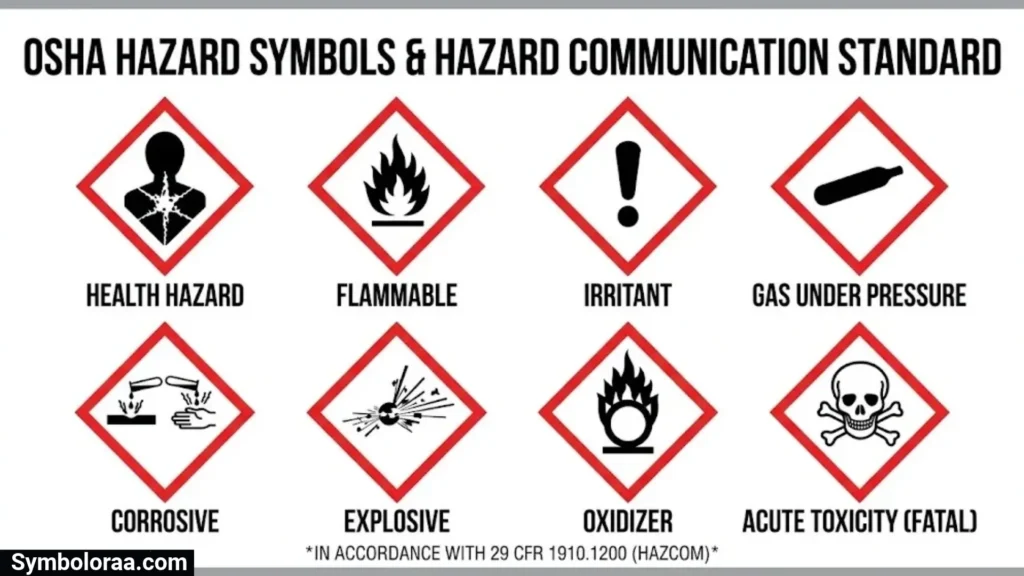
In the United States, the Occupational Safety and Health Administration (OSHA) regulates workplace chemical hazard communication through the Hazard Communication Standard (HCS).
The standard helps ensure that workers receive information about hazardous chemicals in their workplaces.
OSHA’s Hazard Communication Standard follows the GHS approach for chemical classification and labeling. It requires employers to maintain a written hazard communication program, provide access to SDSs, and train employees about workplace chemical hazards.
OSHA’s Eight Required GHS Pictograms
OSHA requires eight GHS pictograms under its Hazard Communication Standard:
- Exploding bomb.
- Flame.
- Flame over circle.
- Gas cylinder.
- Corrosion.
- Skull and crossbones.
- Exclamation mark.
- Health hazard.
The environmental hazard pictogram is not required under OSHA’s HCS.
This distinction matters when comparing international GHS labeling with US workplace chemical labels.
OSHA Hazard Communication Training
Workers must receive information and training about hazardous chemicals in their work areas.
Training should cover:
- How to recognize hazardous chemicals.
- How to read container labels.
- How to understand hazard pictograms.
- How to access and use SDSs.
- What protective measures are required.
- How to detect chemical releases.
- What to do during an emergency.
Employers must provide training when employees are initially assigned to work where hazardous chemicals are present. They must also provide additional training when a new chemical hazard is introduced into the work area.
OSHA’s Updated Hazard Communication Standard
OSHA published a revised Hazard Communication Standard in May 2024. The update primarily aligns the US standard with the seventh revised edition of GHS and includes changes involving chemical classification, labels, and safety data sheets.
OSHA later extended several compliance deadlines in January 2026.
The revised deadlines include:
| Compliance Requirement | Extended Deadline |
| Manufacturers and importers evaluating substances | May 19, 2026 |
| Employers updating workplace labels, programs, and training for substances | November 20, 2026 |
| Manufacturers and importers evaluating mixtures | November 19, 2027 |
| Employers updating workplace labels, programs, and training for mixtures | May 19, 2028 |
The applicable deadline depends on the responsible party and whether the chemical is a substance or mixture. Employers should check the current OSHA requirements and applicable transition provisions before making compliance decisions.
Hazard Symbols vs. Other Safety Warning Signs
Not every safety symbol belongs to the GHS system. Different industries use separate warning systems to communicate specific risks.
For example, chemical labels use GHS pictograms, while transportation labels and emergency response markings follow other standards.
GHS Hazard Symbols vs. OSHA Safety Signs
GHS pictograms communicate chemical hazards. OSHA workplace safety signs communicate broader workplace dangers and instructions.
Examples of workplace signs include:
- Danger signs.
- Warning signs.
- Caution signs.
- Safety instruction signs.
- Emergency information signs.
A workplace may use both GHS chemical labels and general safety signs. Each serves a different purpose.
GHS Symbols vs. NFPA 704 Diamond
NFPA 704 is a separate system used to communicate emergency hazards associated with materials, particularly for emergency responders.
Its diamond contains four colored sections.
| Color | Meaning |
| Blue | Health hazard |
| Red | Flammability |
| Yellow | Instability or reactivity |
| White | Special hazards |
The blue, red, and yellow sections generally use ratings from 0 to 4. A higher number indicates a greater degree of hazard.
The NFPA diamond is not interchangeable with GHS pictograms. GHS labels provide standardized chemical hazard communication, while NFPA 704 helps emergency responders assess material hazards during an incident.
GHS Symbols vs. DOT Hazardous Materials Placards
The US Department of Transportation uses hazardous materials labels and placards to communicate transportation risks.
These markings help identify dangerous goods during shipping and transport.
DOT transportation hazard classes include:
- Class 1: Explosives.
- Class 2: Gases.
- Class 3: Flammable liquids.
- Class 4: Flammable solids and related hazards.
- Class 5: Oxidizing substances and organic peroxides.
- Class 6: Toxic and infectious substances.
- Class 7: Radioactive materials.
- Class 8: Corrosive substances.
- Class 9: Miscellaneous hazardous materials.
DOT placards and GHS pictograms serve different regulatory purposes. A chemical may need different markings depending on whether it is being transported or used in a workplace.
Other Common Safety Symbols
Some warning signs communicate hazards that do not fall under the nine GHS pictograms.
| Symbol Type | Main Warning |
| Biohazard | Infectious or biological materials |
| Radiation | Ionizing radiation |
| Electrical hazard | Electric shock or electrocution |
| Laser warning | Exposure to laser radiation |
| Hot surface | Risk of burns from heated equipment |
| Slippery surface | Risk of slipping and falling |
| High voltage | Dangerous electrical energy |
These signs are common in laboratories, hospitals, factories, construction sites, and public facilities.
How to Identify Hazardous Chemicals
Recognizing hazardous chemicals starts with checking the container and its safety information.
You should never rely on a product’s appearance alone. A chemical that looks like water may still be toxic, corrosive, or flammable.
Use these steps to identify potential chemical hazards:
- Check the product name and product identifier.
- Look for GHS pictograms on the container.
- Read the signal word and hazard statements.
- Review the precautionary statements.
- Check the Safety Data Sheet.
- Identify the required personal protective equipment.
- Confirm the recommended storage conditions.
- Follow workplace chemical handling procedures.
If a container has no readable label, do not use the substance until you can identify it safely through approved workplace procedures.
Chemical Safety Precautions for Handling Hazardous Materials
Understanding hazard symbols is only the first step. You must also follow proper safety procedures when working with hazardous substances.
Good chemical safety practices reduce exposure, prevent accidents, and protect people around you.
Wear Appropriate Personal Protective Equipment
Personal protective equipment (PPE) helps reduce exposure to chemical hazards.
Depending on the substance, you may need:
- Chemical-resistant gloves.
- Safety goggles.
- Face shields.
- Protective clothing.
- Chemical-resistant footwear.
- Respiratory protection.
The correct PPE depends on the chemical and the task. A glove that protects against one solvent may not protect against another.
Always follow the SDS and workplace PPE requirements.
Maintain Proper Ventilation
Some chemicals release vapors, fumes, dust, or gases that can harm your respiratory system.
Use suitable ventilation and approved local exhaust systems when required. Certain laboratory procedures may require a chemical fume hood.
Never assume that opening a door or window provides enough protection from hazardous vapors.
Store Chemicals Correctly
Chemical storage plays an important role in preventing fires, reactions, leaks, and accidental exposure.
Follow these basic practices:
- Keep containers properly closed.
- Store chemicals in compatible groups.
- Separate incompatible substances.
- Keep flammable products away from ignition sources.
- Secure gas cylinders.
- Protect containers from excessive heat.
- Use approved storage cabinets where required.
- Keep storage areas clean and organized.
Always follow the chemical manufacturer’s storage instructions.
Avoid Mixing Unknown Chemicals
Mixing chemicals without checking their compatibility can cause dangerous reactions.
Some combinations release toxic gases. Others generate heat, pressure, or fire.
Never mix cleaning products or industrial chemicals unless the instructions specifically allow it. Even common household products can react dangerously when combined.
Follow Spill Response Procedures
Chemical spills require an appropriate response based on the substance and the amount released.
For a spill:
- Keep people away from the affected area.
- Avoid direct contact with the chemical.
- Follow the workplace emergency procedure.
- Use trained personnel for cleanup.
- Wear the required protective equipment.
- Prevent the chemical from reaching drains when safe and appropriate.
- Report the incident according to workplace rules.
Do not attempt to clean an unfamiliar or dangerous chemical spill without proper training and equipment.
Dispose of Hazardous Chemicals Safely
Never assume a chemical is safe to pour down a drain or place in ordinary trash.
Read the disposal instructions in the SDS and follow local hazardous waste requirements. Use approved waste containers and keep incompatible waste streams separate.
Proper disposal protects workers, waste handlers, and the environment.
Why Are Hazard Symbols Important?
Hazard symbols provide fast and clear warnings about dangerous substances. They help people make safer decisions before handling chemicals or entering hazardous areas.
Their importance extends beyond factories and laboratories.
Prevent Workplace Accidents
Clear warning symbols help workers identify risks before using a chemical. This reduces the chance of burns, poisoning, fires, and other preventable incidents.
Improve Chemical Awareness
A worker who recognizes GHS pictograms can identify potential dangers more quickly. This knowledge supports better handling, storage, and emergency decisions.
Support International Communication
Standardized pictograms make chemical warnings easier to understand across different languages and countries.
A worker may not understand every word on a label. However, a familiar hazard symbol can still communicate an important warning.
Protect Human Health
Some chemicals cause immediate injuries, while others create long-term health risks. Hazard symbols help users recognize these dangers and follow the correct protective measures.
Reduce Environmental Damage
Environmental hazard warnings help users recognize substances that may harm aquatic organisms and ecosystems.
Correct storage, spill prevention, and disposal reduce the chance of chemical contamination.
Common Mistakes People Make When Reading Hazard Symbols
Even familiar GHS pictograms can be misunderstood. Avoiding these mistakes helps you use chemical warning labels more effectively.
Assuming Every Red Diamond Means the Same Thing
All GHS pictograms use a similar red diamond border. However, the image inside communicates a different hazard.
A flame indicates fire-related risks. A skull and crossbones indicates severe acute toxicity. Always identify the actual pictogram.
Confusing the Exclamation Mark With the Health Hazard Symbol
These symbols communicate different levels and types of health risks.
The exclamation mark may indicate irritation or harmful acute effects. The health hazard silhouette identifies certain serious health classifications, including carcinogenicity and respiratory sensitization.
Ignoring Precautionary Statements
The pictogram identifies a hazard, but precautionary statements explain how to reduce the risk.
Read both parts of the label before handling the chemical.
Assuming One Symbol Describes Every Risk
A chemical may carry several pictograms because it presents multiple hazards.
For example, a product could be flammable and harmful to health. One warning symbol cannot communicate every risk associated with that product.
Treating All Chemical Products as Equally Dangerous
Different chemicals have different hazard classifications and exposure risks.
A product’s actual danger depends on its properties, concentration, exposure route, amount, and conditions of use.
Always check the label and SDS instead of making assumptions.
Frequently Asked Questions About Hazard Symbols
What Are the Nine GHS Hazard Symbols?
The nine GHS pictograms are the exploding bomb, flame, flame over circle, gas cylinder, corrosion, skull and crossbones, exclamation mark, health hazard, and environmental hazard.
Each symbol identifies specific physical, health, or environmental hazards.
What Are Hazard Symbols Used For?
Hazard symbols warn people about dangerous chemicals, materials, equipment, and workplace conditions.
They help users recognize risks, follow safety instructions, select protective equipment, and respond to emergencies.
What Does the Skull and Crossbones Symbol Mean?
The skull and crossbones symbol indicates severe acute toxicity. A substance carrying this pictogram can cause serious poisoning or death through swallowing, skin contact, or inhalation, depending on its classification.
What Does the Exclamation Mark Hazard Symbol Mean?
The exclamation mark may indicate skin or eye irritation, harmful acute toxicity, skin sensitization, respiratory irritation, or other specified harmful effects.
Always read the accompanying hazard statements to understand the exact risk.
What Does the Flame Over Circle Symbol Mean?
The flame over circle symbol identifies oxidizing substances. These chemicals can cause or intensify fires by supporting combustion.
What Does the Corrosion Symbol Mean?
The corrosion symbol warns that a chemical can cause severe skin burns, serious eye damage, or corrosion of metals.
What Is the Difference Between GHS and OSHA Hazard Symbols?
GHS is an international chemical classification and labeling framework. OSHA enforces the US Hazard Communication Standard, which adopts GHS-based chemical labeling requirements.
OSHA requires eight GHS pictograms under its standard. The environmental pictogram is not required by OSHA.
How Many Hazard Symbols Are There?
The GHS system contains nine standardized pictograms. Other safety systems use additional symbols for hazards such as radiation, biological materials, electrical risks, and transportation dangers.
The total number of hazard signs depends on which safety system you are discussing.
What Are the Three Main Categories of GHS Hazards?
The three main categories are physical hazards, health hazards, and environmental hazards.
Physical hazards include fire and explosion risks. Health hazards involve harmful effects on the human body. Environmental hazards involve damage to ecosystems and aquatic life.
Are GHS Pictograms Required on Every Chemical?
Not every chemical requires a GHS pictogram. The requirement depends on its hazard classification and the regulations that apply in the relevant country.
A product that does not require a pictogram may still need other label information.
What Is the Difference Between a Hazard Symbol and a Warning Sign?
A hazard symbol is a pictogram that communicates a particular danger. A warning sign is a broader safety communication tool that may include text, colors, symbols, or instructions.
GHS pictograms are commonly used on chemical labels. Workplace warning signs can communicate many other types of danger.
Where Can You Find Hazard Symbols?
You can find hazard symbols on chemical containers, cleaning products, industrial supplies, laboratory reagents, gas cylinders, and hazardous material packaging.
You may also see other safety symbols in factories, hospitals, laboratories, warehouses, and construction areas.
Why Should You Read a Safety Data Sheet?
An SDS provides detailed information about a chemical’s hazards, first aid, firefighting, spill response, storage, exposure controls, and disposal.
It helps you understand the risks beyond what a short container label can explain.
Conclusion
Hazard symbols play an essential role in chemical safety and workplace hazard communication. They help you recognize dangerous substances and understand the risks before handling them.
The nine GHS pictograms cover important physical, health, and environmental hazards. These include flammable materials, oxidizers, explosives, corrosive chemicals, toxic substances, gases under pressure, and chemicals that may cause long-term health effects.
However, recognizing a symbol is only the beginning. You should also read the product label, understand its precautionary statements, and review the Safety Data Sheet when necessary.
If you work in a laboratory, factory, warehouse, or home environment, understanding GHS hazard symbols and their meanings helps you make safer decisions. Learn the symbols, follow the instructions, and never ignore a chemical warning.

I’m Madison Reed, a contemporary American author who writes about love, family, friendship, and second chances. I’m fascinated by the choices that shape our lives and the moments that change us forever. My goal is to create honest, emotional stories with characters readers can connect with long after finishing each book.
Three Books:
When We Find Our Way
The Things We Never Said
Summer in September
 Jackson Miller