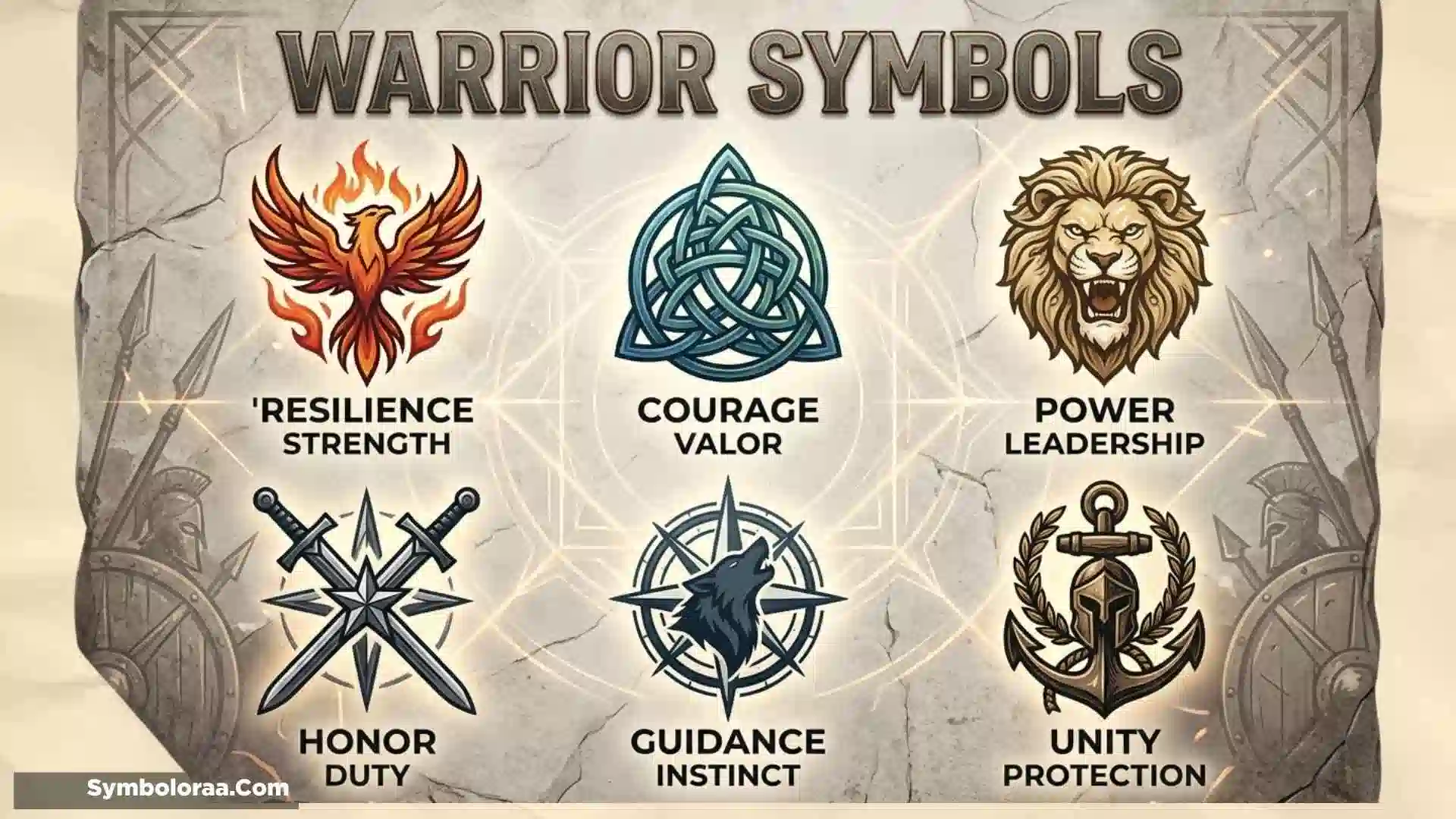
Warrior symbols represent strength, courage, protection, honor, sacrifice, and the spirit of overcoming challenges. Throughout history, civilizations around the world have used warrior symbols in weapons, shields, clothing, tattoos, flags, art, and religious ceremonies to express bravery and identity.
From ancient Norse warriors and Japanese samurai to Native American traditions and modern military designs, these symbols continue to appear in stories, movies, jewelry, and personal expressions of resilience.
Warrior Symbols: (Quick Meaning)
Warrior symbols are visual signs that represent the qualities associated with warriors, including courage, discipline, loyalty, strength, protection, and victory. They come from many cultures and historical periods, such as Viking runes, samurai emblems, Spartan imagery, animal symbols, and weapons. Today, they are commonly used in tattoos, logos, artwork, and personal identity.
Symbol Overview Table
| Category | Details |
| Symbol Name | Warrior Symbols |
| Primary Meaning | Strength, courage, protection, honor, bravery, victory |
| Category | Cultural, historical, military, spiritual, artistic symbols |
| Origin | Ancient civilizations across Europe, Asia, Africa, and the Americas |
| Civilizations or Cultures | Vikings, Romans, Greeks, Japanese, Celtic peoples, Native American cultures, African warrior traditions |
| First Known Use | Ancient prehistoric and early historical societies used weapons, animals, and marks as warrior representations |
| Common Usage | Shields, armor, weapons, flags, tattoos, jewelry, artwork, ceremonies |
| Modern Meaning | Personal strength, resilience, determination, self-defense, overcoming obstacles |
| Unicode | No single Unicode character represents all warrior symbols |
| Emoji Equivalent | crossed swords, shield, dagger, lion (symbolic) |
| Related Symbols | Valknut, Spartan helmet, samurai crest, sword symbols, lion symbols, eagle symbols |
What Do Warrior Symbols Mean?
Warrior symbols represent the qualities that societies traditionally admired in fighters and protectors. The exact meaning depends on the culture, time period, and context in which the symbol appears.
The most common meanings associated with warrior symbols include:
- Courage: The ability to face danger or difficulty without fear.
- Strength: Physical power, mental endurance, and emotional resilience.
- Honor: Following principles, keeping promises, and acting with integrity.
- Protection: Defending family, community, land, or beliefs.
- Victory: Overcoming enemies, challenges, or personal struggles.
- Sacrifice: Accepting hardship for a greater purpose.
- Discipline: Maintaining control and dedication.
A warrior symbol does not always represent violence or conflict. In many cultures, warriors were viewed as protectors, guardians, and individuals who carried responsibility. Modern interpretations often focus more on inner battles, personal growth, and overcoming adversity.
History and Origin of Warrior Symbols
Warrior symbols developed as human societies created organized armies, protective equipment, and systems of identity. Before written languages became widespread, people used images and objects to communicate belonging, power, and social status.
Ancient warriors often decorated their shields, helmets, weapons, and clothing with symbols because these marks served several purposes:
- Identifying groups or clans
- Showing bravery and achievements
- Invoking spiritual protection
- Creating fear among opponents
- Demonstrating rank and leadership
Ancient Greek Warrior Symbols
Ancient Greek warriors, especially the Spartans, became famous for symbols connected with discipline and military strength.
The Spartan helmet and shield became powerful images of warrior identity. The Greek letter lambda (Λ) appeared on Spartan shields and represented Lacedaemon, the region associated with Sparta.
The Spartan warrior symbol is now widely recognized as a representation of courage, discipline, and sacrifice.
Roman Warrior Symbols
Roman soldiers used many symbols connected with military power and imperial authority.
Important Roman warrior symbols included:
- Eagle (Aquila): The sacred military standard carried by Roman legions.
- Gladius sword: A short sword representing Roman military effectiveness.
- Laurel wreath: A symbol of victory and achievement.
The Roman eagle became one of history’s most recognizable military symbols.
Norse and Viking Warrior Symbols
Norse warriors used symbols connected with mythology, gods, fate, and protection.
Important Viking-related warrior symbols include:
- Mjölnir (Thor’s hammer): Protection, strength, and divine power.
- Valknut: Associated with Odin and ideas of warriors, death, and the afterlife.
- Runes: Used as writing symbols and sometimes connected with magical or protective meanings.
Viking symbols often reflected the relationship between warriors, destiny, and spiritual beliefs.
Japanese Samurai Symbols
Japanese samurai culture developed symbols based on loyalty, discipline, family identity, and martial skill.
Common samurai warrior symbols include:
- Mon (family crest): Identified clans and noble families.
- Katana sword: Represented honor, skill, and the samurai way of life.
- Cherry blossom: Symbolized the temporary nature of life and the warrior’s acceptance of mortality.
The samurai warrior ideal emphasized discipline, loyalty, and self-control.
Celtic Warrior Symbols
Celtic cultures used symbols representing protection, bravery, and connection with nature.
Examples include:
- Celtic knots: Eternity, connection, and continuity.
- Animals such as wolves and boars: Strength, courage, and warrior spirit.
- Swords and shields: Protection and battle readiness.
Many Celtic warrior symbols survive today through jewelry, artwork, and tattoos.
Symbolism and Interpretation
Warrior symbols have different interpretations depending on whether they are viewed historically, culturally, spiritually, or personally.
Traditional Meanings
Historically, warrior symbols were connected with:
- Military identity
- Clan loyalty
- Leadership
- Protection of communities
- Spiritual preparation for battle
A warrior symbol often reminded people of the responsibilities carried by those who defended others.
Modern Meanings
Today, warrior symbols are frequently used to represent personal challenges rather than physical warfare.
Modern interpretations include:
- Fighting through hardship
- Personal transformation
- Mental strength
- Confidence
- Independence
- Determination
Someone may choose a warrior tattoo, necklace, or artwork because they identify with the idea of overcoming struggles.
Positive Symbolism
Warrior symbols can represent:
- Bravery
- Confidence
- Leadership
- Survival
- Resilience
- Protection
- Loyalty
Negative Symbolism
Some warrior symbols may also be interpreted negatively because of their association with:
- Violence
- Conquest
- Aggression
- War
- Domination
The meaning depends heavily on context and the intentions of the person using the symbol.
Psychological Interpretation
From a psychological perspective, warrior imagery often represents the inner struggle between challenges and personal growth.
The “warrior archetype” appears in mythology and storytelling as a figure who faces obstacles, develops discipline, and protects important values.
Cultural Significance of Warrior Symbols
Warrior symbols appear in many cultures because almost every society has traditions of protection, conflict, and heroism.
European Warrior Traditions
European warrior symbols often developed around knights, Vikings, Roman soldiers, and Celtic fighters.
Common themes include:
- Honor
- Loyalty
- Family heritage
- Courage
- Military achievement
Coats of arms and heraldic symbols continued these traditions by using animals, weapons, and colors to represent warrior families.
Asian Warrior Traditions
Asian warrior symbols frequently emphasize discipline, spiritual development, and loyalty.
Examples include:
- Samurai crests in Japan
- Dragon symbols in Chinese traditions
- Martial arts symbols throughout East Asia
Many Asian warrior traditions connect physical skill with moral development.
Indigenous Warrior Symbols
Many Indigenous cultures of the Americas developed warrior traditions connected with community protection, animals, nature, and spirituality.
Warrior symbols could include:
- Eagle feathers
- Animal imagery
- Shields
- Painted designs
- Ceremonial objects
Meanings vary greatly among different Indigenous nations, and symbols should always be understood within their specific cultural context.
African Warrior Traditions
African societies have many warrior traditions with symbols representing leadership, courage, ancestry, and protection.
Examples include:
- Animal symbols
- Shields
- Spears
- Royal emblems
- Decorative body markings
Different African cultures developed unique warrior identities connected to their history and environment.
Religious or Spiritual Meaning of Warrior Symbols
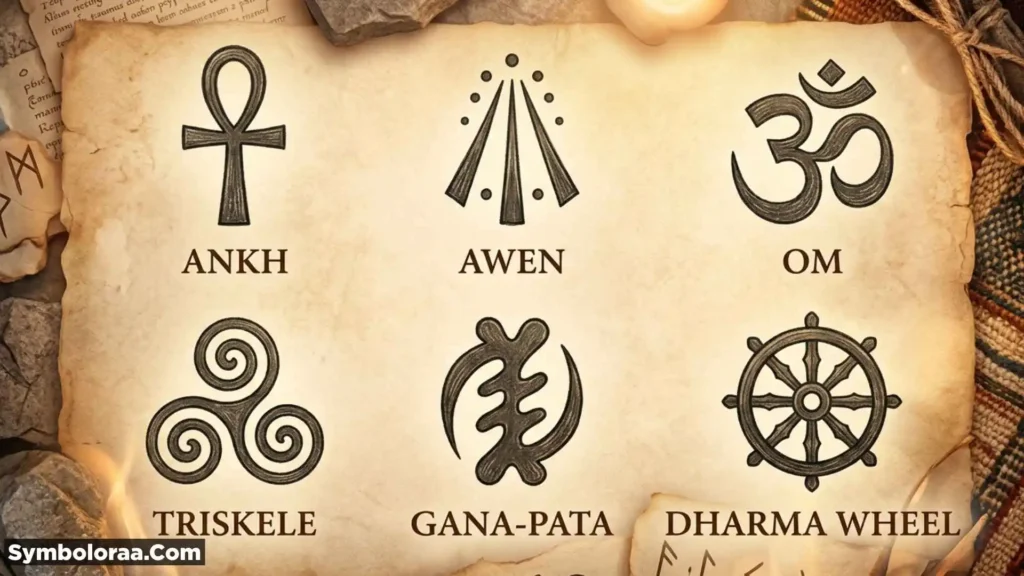
Warrior symbols often have spiritual meanings because many ancient cultures connected warfare, protection, and destiny with religious beliefs.
Norse Spiritual Symbolism
Norse warrior symbols were closely connected with gods such as Odin and Thor.
- Thor’s hammer represented protection and strength.
- Valknut was associated with warriors chosen by Odin and ideas of death and destiny.
Hindu Warrior Symbolism
In Hindu traditions, warrior symbolism appears through concepts such as dharma (duty and righteousness).
Figures like Arjuna represent the warrior who must balance courage with moral responsibility.
Weapons associated with Hindu deities often symbolize the victory of righteousness over chaos.
Buddhist Warrior Symbolism
Some Buddhist traditions use warrior imagery symbolically rather than militarily.
The warrior represents:
- Fighting ignorance
- Overcoming suffering
- Developing discipline
- Protecting wisdom
The concept of the spiritual warrior focuses on inner transformation.
Where Warrior Symbols Are Used
Warrior symbols appear in many areas of human culture.
Tattoos
Warrior tattoos are popular because they allow people to express:
- Strength
- Survival
- Personal victories
- Family heritage
- Identity
Common designs include swords, helmets, shields, wolves, lions, and ancient warrior figures.
Jewelry
Warrior symbols are used in:
- Rings
- Necklaces
- Bracelets
- Pendants
People often wear them as reminders of courage and determination.
Military Designs
Modern military organizations use symbols such as:
- Eagles
- Swords
- Shields
- Lions
- Stars
These designs communicate authority, courage, and service.
Movies and Literature
Warrior symbols appear frequently in:
- Fantasy novels
- Historical films
- Video games
- Comics
- Mythological stories
They help audiences quickly recognize themes of heroism, conflict, and bravery.
Logos and Brands
Companies sometimes use warrior imagery to suggest:
- Strength
- Reliability
- Competition
- Leadership
Sports teams especially use warrior-related designs to represent determination.
Common Variations of Warrior Symbols
Warrior symbols exist in many forms depending on culture and artistic style.
Weapon-Based Symbols
Examples include:
- Swords
- Spears
- Axes
- Daggers
Weapons usually symbolize power, defense, and readiness.
Animal Warrior Symbols
Animals frequently represent warrior qualities.
| Animal | Meaning |
| Lion | Courage, leadership, strength |
| Eagle | Vision, freedom, power |
| Wolf | Loyalty, teamwork, survival |
| Bear | Strength and protection |
| Dragon | Power and transformation |
Armor Symbols
Helmets, shields, and armor represent:
- Protection
- Preparation
- Defense
- Responsibility
Modern Warrior Designs
Modern adaptations often combine ancient symbols with:
- Geometric patterns
- Minimalist artwork
- Digital designs
- Contemporary tattoos
Common Misconceptions About Warrior Symbols
Warrior Symbols Always Represent Violence
This is incorrect. Many warrior symbols represent protection, discipline, courage, and personal strength rather than aggression.
All Warrior Symbols Have Universal Meanings
A symbol’s meaning changes across cultures. A sword may represent honor in one tradition and conflict in another.
Ancient Symbols Have Only One Interpretation
Historical symbols often had multiple meanings depending on the period, region, and social context.
Warrior Symbols Are Only for Soldiers
Today, many people use warrior imagery to represent personal challenges, emotional strength, and resilience.
Interesting Facts About Warrior Symbols
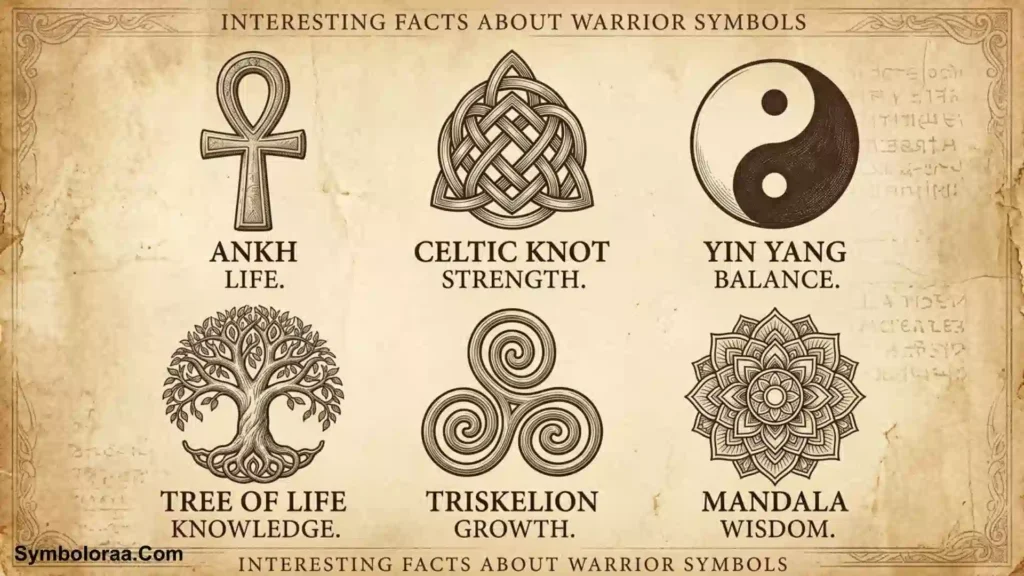
1. Many Warrior Symbols Began as Identification Marks
Before modern uniforms existed, warriors used symbols on shields, banners, and clothing to identify their groups during battles.
2. The Sword Is One of the Most Universal Warrior Symbols
Across Europe, Asia, and the Middle East, swords became symbols of authority, justice, and power.
3. Animal Symbols Were Chosen for Their Natural Qualities
Warriors often selected animals such as lions, wolves, and eagles because people admired their strength and survival abilities.
4. Warrior Symbols Often Combined Physical and Spiritual Meaning
Many cultures believed symbols could provide protection, courage, or connection with divine forces.
5. Samurai Symbols Focused on Identity and Family
Japanese samurai used family crests called mon to show clan connections and heritage.
6. Warrior Imagery Appears in Modern Psychology
The warrior archetype is often used to describe personal growth, confidence, and overcoming obstacles.
7. Some Warrior Symbols Changed Meaning Over Time
A symbol that once represented a specific group may later become a broader cultural or artistic symbol.
8. Shields Were More Than Defensive Tools
Historically, shields often carried important designs showing identity, achievements, and social status.
9. Warrior Symbols Are Common in Fantasy Worlds
Books, films, and games use warrior symbols because they quickly communicate heroism and adventure.
10. Many Warrior Symbols Are Still Used Today
Modern tattoos, sports logos, military badges, and artwork continue ancient warrior traditions.
Related Symbols
Sword Symbol
A sword represents courage, justice, authority, and sometimes conflict. It is one of the most recognizable warrior images worldwide.
Shield Symbol
A shield symbolizes protection, defense, and safety.
Lion Symbol
The lion represents leadership, bravery, and dominance.
Eagle Symbol
The eagle symbolizes freedom, vision, and power.
Viking Symbols
Norse symbols such as Mjölnir and runes connect warrior identity with mythology and protection.
Samurai Symbols
Samurai imagery focuses on discipline, loyalty, honor, and mastery.
Frequently Asked Questions
What is the most powerful warrior symbol?
There is no single most powerful warrior symbol because meanings depend on culture. Swords, shields, lions, eagles, Viking symbols, and samurai symbols are among the most recognized worldwide.
What do warrior symbols represent spiritually?
Warrior symbols often represent inner strength, courage, discipline, protection, and the struggle to overcome personal challenges.
What is a good warrior symbol for tattoos?
Popular warrior tattoo symbols include swords, shields, lions, wolves, samurai helmets, Viking symbols, and Spartan imagery because they represent strength and resilience.
Are warrior symbols only related to war?
No. Many warrior symbols represent protection, honor, personal growth, and overcoming difficulties rather than fighting.
What animal represents a warrior?
Common warrior animals include lions, wolves, bears, and eagles. Each represents different qualities such as courage, loyalty, strength, and freedom.
What is the Viking warrior symbol?
Viking warrior symbols include Mjölnir, Valknut, and various runes. Their meanings are connected with protection, mythology, fate, and warrior traditions.
What does a sword symbolize?
A sword can symbolize courage, justice, authority, strength, and the ability to overcome challenges.
Why do people use warrior symbols today?
People use warrior symbols to express identity, resilience, personal achievements, cultural connections, and determination.
Key Takeaways
- Warrior symbols represent courage, strength, protection, and honor.
- Different cultures created unique warrior imagery based on their beliefs and history.
- Ancient warrior symbols often combined military and spiritual meanings.
- Modern uses focus more on personal strength and overcoming challenges.
- Weapons, animals, shields, and armor remain popular warrior designs.
- The meaning of a warrior symbol depends on cultural context.
Conclusion
Warrior symbols are powerful reminders of human courage, resilience, and the desire to protect what matters. From ancient shields and swords to modern tattoos and artwork, these symbols continue to connect people with ideas of strength, discipline, and personal growth.
Although warrior symbols originated in societies shaped by conflict, their modern meaning often focuses on inner battles, determination, and overcoming life’s challenges. Understanding the history and cultural background behind warrior symbols helps reveal why these images remain meaningful across generations.

I’m Jackson Miller, an American author inspired by mystery, adventure, and the unpredictable nature of life. I enjoy writing fast-moving stories filled with memorable characters, unexpected choices, and meaningful moments. Through my books, I want readers to experience new worlds while discovering something about courage, determination, and themselves.
Three Books:
The Edge of Tomorrow
Under a Broken Sky
The Road We Chose
 Madison Reed