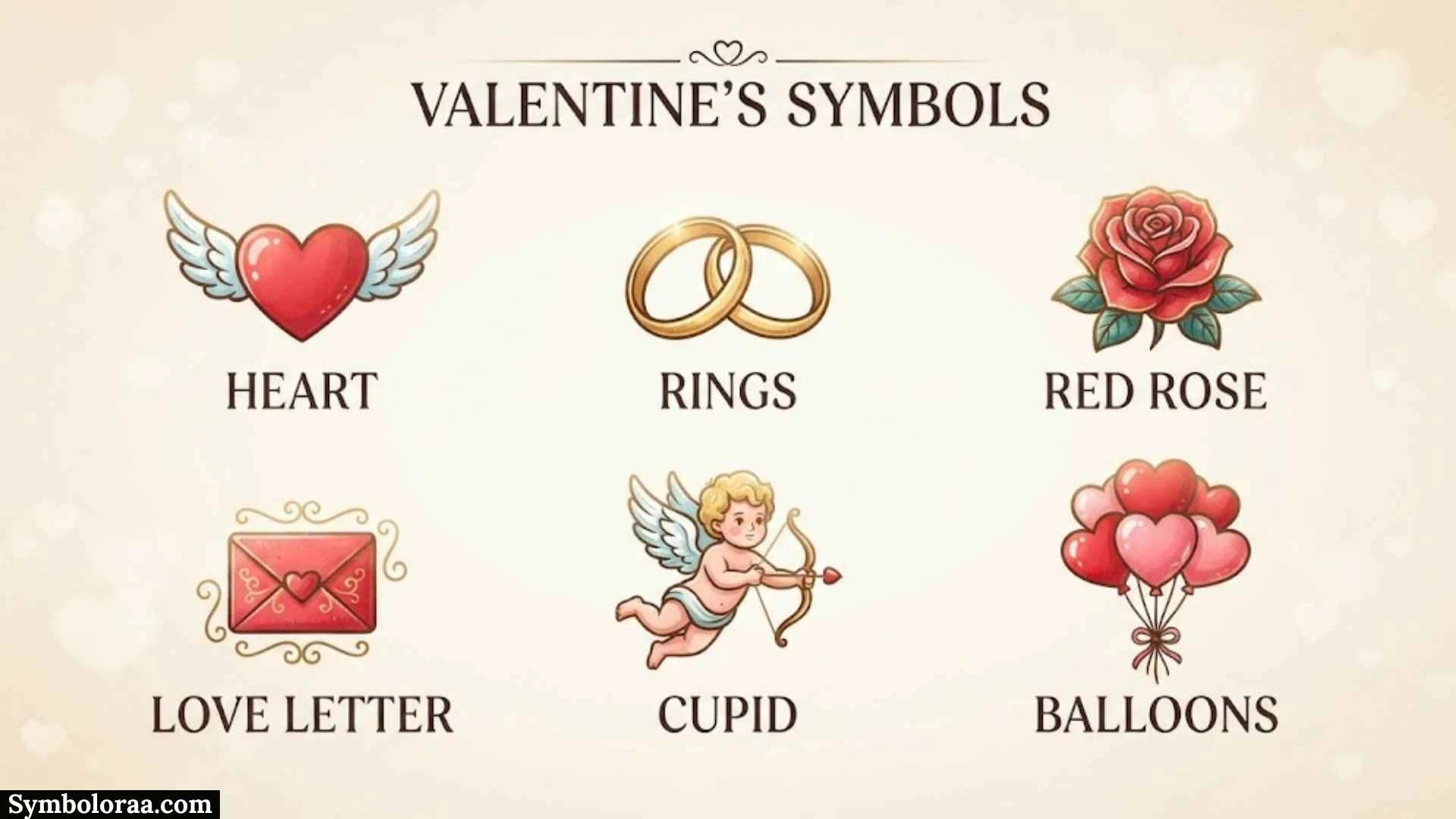
Valentine’s symbols make it easier to communicate love, affection, attraction, friendship, appreciation, and commitment without using many words. The heart, red rose, Cupid, arrow, Valentine’s card, chocolate, ring, kiss, and lovebirds are among the most recognizable examples.
But these symbols do not all have the same origin or meaning. Some come from mythology and older traditions, while others became associated with Valentine’s Day through literature, greeting cards, flower symbolism, gift-giving, and modern popular culture.
This guide explains the most important Valentine’s symbols and their meanings, where they came from, how they are used today, and how to choose the right symbol for a romantic partner, spouse, friend, family member, or another person you care about.
Quick Answer: What Are the Main Valentine’s Symbols?
The most common Valentine’s symbols include:
| Symbol | Common Meaning | Typical Use |
| ❤️ Heart | Love, affection, emotional connection | Cards, gifts, jewelry |
| 🌹 Red Rose | Romantic love, passion, devotion | Bouquets, cards, gifts |
| 🏹 Cupid | Romantic attraction and desire | Cards, decorations, artwork |
| 💘 Heart With Arrow | Falling in love or attraction | Digital messages, designs |
| 💌 Valentine’s Card | Expressed affection or appreciation | Romantic and friendly messages |
| 🍫 Chocolate | Gift-giving, pleasure, affection | Valentine’s gifts |
| 💍 Ring | Commitment and lasting love | Engagements, anniversaries |
| 🕊️ Lovebirds | Partnership and companionship | Cards, artwork, decorations |
| 💋 Kiss | Romantic affection and intimacy | Cards, emojis, messages |
| 💕 Two Hearts | Mutual love and connection | Messages, jewelry, designs |
| 🎀 Ribbon | Gift-giving and decorative romance | Gifts and decorations |
| 🧸 Teddy Bear | Sweetness, comfort, affection | Gifts and children’s cards |
The meaning of a symbol depends on its context. A red rose normally communicates stronger romantic intent than a simple heart used in a friendly message.
What Are Valentine’s Symbols?
Valentine’s symbols are visual objects, colors, figures, flowers, gestures, or designs that people commonly associate with Valentine’s Day and expressions of affection.
There is no single universal official list of Valentine’s symbols. Instead, the modern collection developed through different cultural traditions.
Some symbols are closely connected with romantic love. Others became associated with Valentine’s Day because they were repeatedly used in cards, advertisements, gifts, decorations, and popular culture.
Traditional Symbols vs Modern Associations
It is useful to distinguish between a symbol’s historical background and its modern Valentine’s meaning.
For example, Cupid has roots in classical mythology, while the modern Valentine’s gift tradition involving chocolates and elaborate packaging developed much later.
Similarly, the heart is now a universal visual shorthand for love, but the familiar heart shape is a conventional symbol rather than a realistic drawing of the human heart.
Why Symbol Meaning Depends on Context
A symbol does not always communicate exactly the same message.
Consider a heart:
- A red heart sent to a spouse can express romantic love.
- A heart sent to a friend can express care or appreciation.
- A heart on a children’s Valentine’s card can represent friendship.
- A broken heart can communicate sadness or lost love.
The surrounding words, colors, relationship, and situation help determine the intended meaning.
The Heart: The Most Recognizable Symbol of Love
The heart is one of the strongest visual symbols associated with Valentine’s Day.
❤️
It commonly represents:
- Love
- Affection
- Care
- Compassion
- Emotional connection
- Romantic feelings
The heart is particularly powerful because people can understand its general meaning quickly, even without accompanying text.
Why Does the Heart Represent Love?
The symbolic connection between the heart and emotion has a long cultural history. People have associated the heart with life, feeling, courage, and inner emotion in different societies.
The familiar heart symbol, however, is not an anatomical drawing. It developed as a stylized artistic form and eventually became strongly connected with love.
This distinction is important when explaining its history: the modern heart symbol should be understood as a cultural convention rather than as an exact representation of human anatomy.
Different Heart Symbols and Their Meanings
Modern digital communication has expanded the traditional heart into many variations.
| Symbol | Common Interpretation |
| ❤️ Red Heart | Love, affection, strong emotional connection |
| 🩷 Pink Heart | Tenderness, sweetness, gentle affection |
| 💕 Two Hearts | Mutual affection or romantic connection |
| 💖 Sparkling Heart | Joyful, exciting, enthusiastic affection |
| 💘 Heart With Arrow | Falling in love or romantic attraction |
| 💔 Broken Heart | Heartbreak, sadness, emotional loss |
These interpretations are common conventions, not strict rules. The same emoji can have different meanings depending on the relationship and conversation.
Red Roses: A Classic Symbol of Romantic Love
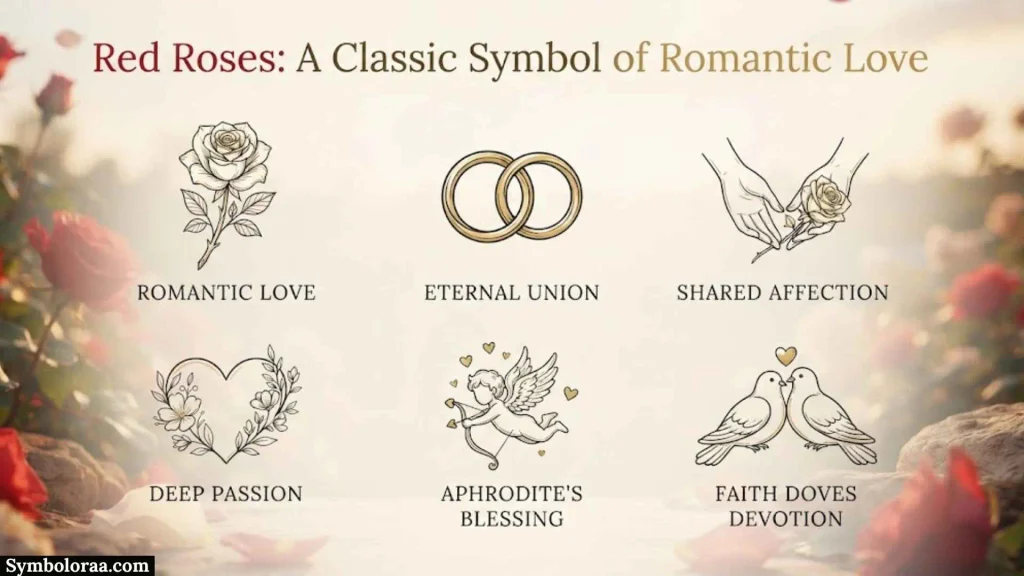
The red rose is one of the most recognizable Valentine’s flowers.
It commonly symbolizes:
- Romantic love
- Passion
- Devotion
- Beauty
- Strong affection
The Library of Congress notes that roses have established associations with love and that red roses are particularly connected with lovers and Valentine’s Day.
Why Are Red Roses Associated With Love?
Flower symbolism developed through cultural traditions in which particular flowers and colors were given symbolic meanings.
The red rose became especially strong as a romantic symbol because red is frequently associated with passion, intensity, and love.
This is why a bouquet of red roses can communicate a romantic message even when no card is included.
What Do Different Rose Colors Mean?
Rose meanings vary across traditions, but common modern associations include:
| Rose Color | Common Association |
| Red | Romantic love and passion |
| Pink | Admiration, tenderness, appreciation |
| White | Purity, innocence, remembrance |
| Yellow | Friendship, warmth, happiness |
| Orange | Enthusiasm, energy, desire |
These meanings should be treated as cultural conventions rather than universal rules.
When Should You Choose Red Roses?
Red roses are most appropriate when the intended message is clearly romantic.
For example:
- A spouse’s Valentine’s bouquet
- An anniversary gift
- A romantic proposal
- A long-term partner’s Valentine’s gift
If you are sending flowers to a friend, pink or yellow flowers may communicate affection without creating the same romantic expectation.
Cupid: The Symbol of Romantic Attraction
Cupid is one of the most recognizable figures in Valentine’s imagery.
He is commonly shown as a winged figure carrying a bow and arrows.
In Roman mythology, Cupid is associated with desire and love and corresponds to the Greek figure Eros.
What Does Cupid Represent?
Cupid commonly represents:
- Romantic attraction
- Desire
- Falling in love
- Courtship
- Romantic playfulness
His presence on a Valentine’s card immediately establishes a romantic theme.
Why Does Cupid Carry a Bow and Arrow?
The arrow provides a visual metaphor for the sudden impact of romantic attraction.
The familiar idea is that someone struck by Cupid’s arrow falls in love.
This is why Cupid frequently appears alongside:
- Hearts
- Roses
- Romantic messages
- Couples
- Valentine’s cards
A Cupid design is therefore more specific than a general heart. It usually signals romantic attraction rather than affection in a broad sense.
The Arrow and Heart: Falling in Love
A heart pierced by an arrow is one of the classic Valentine’s designs.
💘
The image combines two ideas:
- The heart represents love.
- The arrow represents Cupid’s influence and romantic attraction.
Together, they communicate the idea of falling in love.
Where Is the Heart-and-Arrow Symbol Used?
You can find this design on:
- Valentine’s cards
- Jewelry
- Tattoos
- Posters
- Gift packaging
- Social media graphics
- Romantic artwork
It can also be personalized with names, initials, or dates.
Valentine’s Cards: A Symbol of Expressed Feelings
A Valentine’s card represents more than a physical piece of paper. It symbolizes the act of expressing affection through words.
The tradition has a long history. The Library of Congress documents Valentine’s materials from the nineteenth century, including cards featuring Cupid, flowers, sentimental messages, and other romantic imagery.
The British Library also catalogs collections of handmade Valentine’s cards from around 1850–1860, showing that elaborate Valentine’s cards were already an established form of expression in the nineteenth century.
What Can a Valentine’s Card Communicate?
A card can express:
- Romantic love
- Friendship
- Appreciation
- Gratitude
- Admiration
- Playful affection
- Family love
This makes cards more flexible than symbols such as engagement rings, which usually communicate a more specific type of commitment.
Why Did Cards Become So Important?
Cards provided a way to combine visual symbolism with personal language.
A heart or rose could establish the emotional theme, while a poem or personal message explained what the sender wanted to say.
Historical Valentine’s cards demonstrate how words and imagery worked together. Some surviving examples contain floral artwork, poems, Cupid figures, angels, and sentimental messages.
Chocolate: A Modern Valentine’s Gift Symbol
Chocolate is now strongly associated with Valentine’s Day in many countries.
It can represent:
- Affection
- Pleasure
- Thoughtfulness
- Celebration
- Gift-giving
Chocolate should be understood primarily as a modern Valentine’s gift tradition, rather than as an ancient symbol originating with Saint Valentine.
Why Does Chocolate Work as a Valentine’s Gift?
Chocolate is easy to package, share, personalize, and combine with other gifts.
Heart-shaped boxes have also helped connect chocolate visually with Valentine’s imagery.
A box of chocolates decorated with hearts combines several symbolic messages:
- The chocolate represents the gift.
- The heart represents love.
- The packaging creates a Valentine’s theme.
Lovebirds: Symbols of Partnership and Companionship
Lovebirds are often used to represent couples.
The word itself has become a familiar expression for two people who are strongly attached to each other.
In Valentine’s designs, lovebirds can symbolize:
- Romantic partnership
- Companionship
- Mutual affection
- Togetherness
- Loyalty
When Are Lovebirds Useful?
Lovebird imagery can work particularly well for:
- Couples
- Wedding stationery
- Anniversary designs
- Romantic artwork
- Valentine’s cards
They are also useful when the goal is to emphasize partnership rather than intense passion.
Rings: Symbols of Commitment
A ring has a different meaning from Cupid or a rose.
It commonly represents:
- Commitment
- Partnership
- Devotion
- Marriage
- Long-term love
The circular shape can also be interpreted as a representation of continuity or an unbroken bond.
Valentine’s Ring vs Engagement Ring
A Valentine’s ring does not automatically mean engagement.
A decorative ring can simply be a romantic gift, while an engagement ring has a more specific social meaning connected with a promise of marriage.
This distinction matters when interpreting a gift.
Kisses and Lips: Romantic Affection
The kiss is another common Valentine’s symbol.
💋
It can represent:
- Romantic affection
- Intimacy
- Attraction
- Emotional closeness
A kiss mark is generally more directly romantic than a simple heart.
Why Are Kisses Used in Valentine’s Designs?
A kiss is a recognizable human gesture of affection. Turning it into a symbol allows designers to communicate intimacy without writing a long message.
Kiss imagery appears in:
- Cards
- Jewelry
- Cosmetics and gift packaging
- Social media posts
- Valentine’s decorations
- Romantic artwork
Two Hearts: Mutual Love and Connection
Two hearts can communicate a shared emotional bond.
💕
The design may represent:
- Mutual love
- A romantic couple
- Emotional connection
- Partnership
- Shared affection
Compared with a single heart, two hearts can make the relationship aspect more obvious.
Where Are Two Hearts Commonly Used?
Two-heart designs are especially common in:
- Couple jewelry
- Anniversary cards
- Valentine’s decorations
- Wedding designs
- Digital messages
- Personalized gifts
Ribbons and Bows: Symbols of Gift-Giving
Ribbons and bows are not exclusively Valentine’s symbols, but they are frequently used in Valentine’s designs.
They can suggest:
- Gift-giving
- Celebration
- Beauty
- Presentation
- Romantic decoration
A heart-shaped gift box tied with a ribbon combines the visual language of romance with the visual language of presenting a special gift.
Teddy Bears: Sweetness and Comfort
Teddy bears are common Valentine’s gifts, especially in cute and playful designs.
They can represent:
- Affection
- Comfort
- Warmth
- Sweetness
- Caring
- Playfulness
A teddy bear usually communicates a softer emotional message than a ring or red rose.
For this reason, teddy bears can be appropriate for younger recipients, new relationships, or people who prefer cute gifts.
Valentine’s Day Colors and Their Meanings
Colors help establish the emotional tone of Valentine’s designs.
Red
Red is strongly associated with:
- Romantic love
- Passion
- Desire
- Energy
Red hearts and roses therefore create a strongly romantic visual message.
Pink
Pink often suggests:
- Tenderness
- Sweetness
- Caring
- Admiration
- Playful affection
Pink can work for both romantic and friendship-oriented Valentine’s messages.
White
White may suggest:
- Purity
- Innocence
- Simplicity
- Peace
Its meaning can change depending on cultural and religious context.
Purple
Purple can communicate:
- Elegance
- Creativity
- Mystery
- Admiration
It is used in Valentine’s designs but does not have the same universal association with the holiday as red and pink.
Valentine’s Emojis and Digital Symbols
Digital communication has created a modern layer of Valentine’s symbolism.
| Emoji | Common Meaning |
| ❤️ | Love and affection |
| 🩷 | Tender or gentle affection |
| 💕 | Mutual love |
| 💖 | Excited or joyful affection |
| 💘 | Romantic attraction |
| 💋 | Kiss or romantic affection |
| 😍 | Strong admiration or attraction |
| 🥰 | Feeling loved or affectionate |
| 🌹 | Romantic love or appreciation |
| 💌 | Love message or Valentine’s card |
Why Do Digital Symbols Matter?
People now communicate Valentine’s messages through:
- Text messages
- Social media captions
- Comments
- Stories
- Digital cards
- Messaging apps
An emoji can function like a miniature visual symbol, allowing someone to add emotional meaning without writing a complete sentence.
For example:
“Happy Valentine’s Day ❤️”
has a different emotional tone from:
“Happy Valentine’s Day.”
The heart adds an explicit visual signal of affection.
The History Behind Valentine’s Symbols
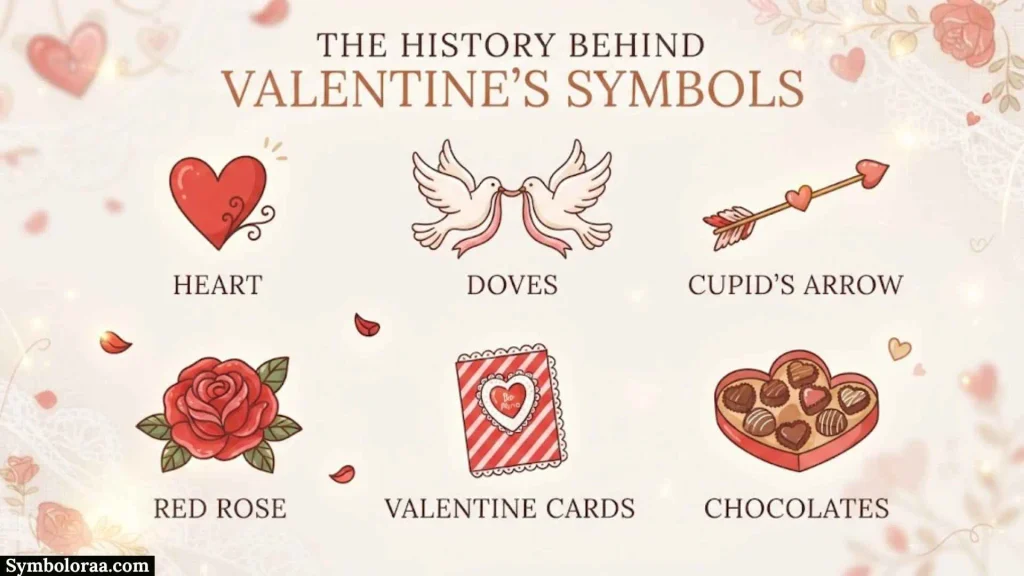
Modern Valentine’s symbolism developed over centuries. It is not the product of one single historical event.
Different traditions contributed different pieces of today’s visual language.
Saint Valentine and the Name of the Holiday
The historical Saint Valentine is associated with February 14, but accounts of the saint’s identity and the development of the holiday are complicated.
It is important not to present every popular Valentine’s story as established historical fact.
The modern holiday combines religious history, medieval literature, customs surrounding courtship, printed cards, flowers, gifts, and later commercial traditions.
Medieval Literature and Romantic Love
Medieval literature played an important role in connecting Valentine’s Day with romantic themes.
Geoffrey Chaucer is frequently discussed in histories of Valentine’s Day because of his fourteenth-century writing about Saint Valentine’s feast day and courtship.
However, the exact development from medieval references to the modern holiday was gradual rather than a single direct transformation.
Handmade Valentine Messages
Valentine messages existed before modern mass-produced cards.
The Library of Congress notes that handmade Valentine’s messages began appearing in the late seventeenth century, while commercial card production developed in England during the early nineteenth century.
This helps explain why the Valentine’s card became such an important symbol.
Victorian Valentine Cards
The nineteenth century brought a major expansion of Valentine’s card culture.
The British Library’s catalog contains a collection of 39 manuscript Valentine’s cards dating from approximately 1850–1860.
The Library of Congress also preserves nineteenth-century examples featuring Cupid, flowers, poems, angels, and sentimental messages.
These surviving examples show that many familiar Valentine’s design elements have historical roots in greeting-card culture.
The Rise of Commercial Valentine’s Cards
The Library of Congress describes the growth of commercial Valentine’s cards in England during the early nineteenth century and identifies Esther Howland as an important figure in bringing elaborate Valentine’s cards into mainstream American culture.
As card production expanded, familiar combinations of hearts, flowers, Cupid, romantic messages, and decorative elements became increasingly recognizable.
Valentine’s Symbols vs General Love Symbols
Not every symbol associated with love is specifically a Valentine’s symbol.
| Symbol | General Love Meaning | Valentine’s Association |
| Heart | Strong | Very strong |
| Red Rose | Strong | Very strong |
| Cupid | Romantic attraction | Very strong |
| Ring | Commitment | Strong |
| Lovebirds | Partnership | Strong |
| Dove | Peace, love, spirituality | Moderate |
| Infinity Symbol | Endless connection | Modern strong association |
| Chocolate | Gift and affection | Strong |
| Kiss | Romantic affection | Strong |
This distinction is useful when researching symbolism because it prevents the assumption that every romantic symbol originated as a Valentine’s tradition.
Traditional and Modern Valentine’s Symbols Compared
Valentine’s visual language includes older imagery as well as modern digital symbols.
| Traditional or Historical Associations | Modern Associations |
| Cupid | Heart emojis |
| Roses | Digital cards |
| Heart imagery | Social media posts |
| Love poetry | GIFs and stickers |
| Handmade cards | Online gift messages |
| Arrows | Personalized merchandise |
| Flowers | Digital Valentine’s graphics |
Modern communication has expanded the way people use Valentine’s symbolism rather than simply replacing older traditions.
Valentine’s Symbols for Different Relationships
The same symbol may not be appropriate for every relationship.
For a Romantic Partner
Good choices include:
- Red heart
- Red rose
- Cupid
- Heart with arrow
- Two hearts
- Kiss
These symbols make romantic intent clear.
For a Spouse
Consider:
- Red roses
- Rings
- Two hearts
- Personalized heart designs
- Anniversary-style symbols
These emphasize both affection and long-term connection.
For a New Relationship
A softer symbol may be more suitable, such as:
- Pink heart
- Small bouquet
- Chocolate
- Simple Valentine’s card
- Cute gift
This can communicate affection without implying a level of commitment that has not been established.
For a Friend
Consider:
- Pink heart
- Yellow flowers
- Friendship-themed card
- Cute designs
- Appreciation messages
This helps distinguish friendship from romantic interest.
For Family
A heart, flowers, card, or appreciation-themed design can communicate care without making the message romantic.
For Children
Common choices include:
- Teddy bears
- Colorful hearts
- Candy
- Cute animals
- Friendly Valentine’s cards
The symbolism should match the child’s age and relationship with the sender.
How to Choose the Right Valentine’s Symbol
Use the relationship and intended message as your starting point.
Simple Decision Guide
What do you want the symbol to communicate?
Romantic attraction?
→ Choose Cupid, a red heart, a red rose, or a heart with an arrow.
Deep affection?
→ Choose a heart, two hearts, roses, or a personalized card.
Long-term commitment?
→ Choose a ring, interlocking hearts, or an infinity design.
Friendship?
→ Choose a pink heart, yellow flowers, or a friendly card.
Sweet and playful affection?
→ Choose a teddy bear, pink heart, candy, or cute character.
A personal message?
→ Choose a Valentine’s card and combine it with a symbol that matches the relationship.
This approach is more useful than choosing a symbol simply because it looks romantic.
How to Combine Multiple Valentine’s Symbols
Using several symbols can make the intended message clearer.
For example:
Red rose + red heart + handwritten card
= romantic love with a personal message.
Chocolate + teddy bear + pink heart
= sweet and playful affection.
Ring + two hearts + personal message
= commitment and emotional connection.
Yellow flowers + friendly card + small heart
= friendship and appreciation.
The key is to avoid mixing symbols that send conflicting messages.
For example, an engagement-style ring combined with a casual friendship message could create confusion.
Valentine’s Symbols for Tattoos and Jewelry
Valentine-inspired symbols can become highly personal when used in tattoos or jewelry.
Popular designs include:
- Hearts
- Roses
- Arrows
- Cupid
- Initials
- Names
- Dates
- Infinity symbols
- Interlocking hearts
How to Make a Symbol Personal
Instead of using a generic heart, someone might combine it with:
- A meaningful date
- Initials
- A birth flower
- A short phrase
- A geographic reference
- A pair of matching symbols
The general cultural meaning remains, but the personal details give the design a specific story.
Common Misconceptions About Valentine’s Symbols
Understanding what a symbol means also requires understanding what it does not necessarily mean.
Misconception 1: Every Valentine’s Symbol Is Ancient
Not all Valentine’s symbols are ancient.
Some have roots in classical mythology, while others became popular much later through literature, greeting cards, flowers, commercial gift-giving, and modern media.
Misconception 2: Cupid Was Created for Valentine’s Day
Cupid comes from Roman mythology and was not originally created as a Valentine’s Day character.
His association with Valentine’s Day developed as older ideas about love and desire became incorporated into Valentine’s imagery.
Misconception 3: A Ring Always Means Engagement
A ring can represent many things, including affection, commitment, fashion, or a personal promise.
Its meaning depends on the context.
Misconception 4: Red Is the Only Valentine’s Color
Red is the strongest conventional Valentine’s color, but pink, white, purple, and other colors are also widely used.
Misconception 5: Valentine’s Day Symbols Are Only for Couples
Valentine’s messages can express friendship, family affection, gratitude, and appreciation as well as romantic love.
Common Mistakes When Using Valentine’s Symbols
Choosing a Symbol Without Considering the Relationship
A highly romantic symbol may send an unintended message when used for a friend or coworker.
Assuming Flower Colors Have Universal Meanings
Flower symbolism varies between cultures and traditions. Treat common color meanings as conventions rather than absolute rules.
Presenting Popular Stories as Historical Facts
Valentine’s history contains traditions, legends, interpretations, and documented records. These should not all be presented with the same level of certainty.
Using Too Many Symbols at Once
A design containing hearts, Cupid, roses, rings, arrows, kisses, chocolates, and multiple colors can become visually crowded.
Choose a main symbol and use one or two supporting elements.
Confusing Valentine’s Symbols With Wedding Symbols
Hearts and roses work in both contexts, but rings and wedding-specific imagery often communicate commitment or marriage more directly.
Real-World Examples of Valentine’s Symbol Choices
Example 1: A Husband Buying a Valentine’s Gift
A husband chooses red roses, a heart-shaped card, and chocolates.
The roses communicate romantic love, the heart reinforces affection, and the card allows him to add a personal message.
Example 2: Friends Exchanging Valentine’s Cards
Two friends exchange cards containing pink hearts and humorous messages.
The heart represents affection, but the surrounding message establishes that the relationship is friendship rather than romance.
Example 3: A New Couple
Someone in a new relationship chooses a small bouquet and a simple Valentine’s card instead of an engagement-style ring.
The symbols communicate affection without automatically suggesting a major commitment.
Example 4: A Digital Valentine’s Message
Someone sends:
“Happy Valentine’s Day ❤️🌹”
The heart communicates affection while the rose strengthens the romantic meaning.
Example 5: A Jewelry Design
A necklace contains two interlocking hearts with initials.
The hearts represent connection, while the initials make the design personal to the two people involved.
Valentine’s Symbols in Marketing and Design
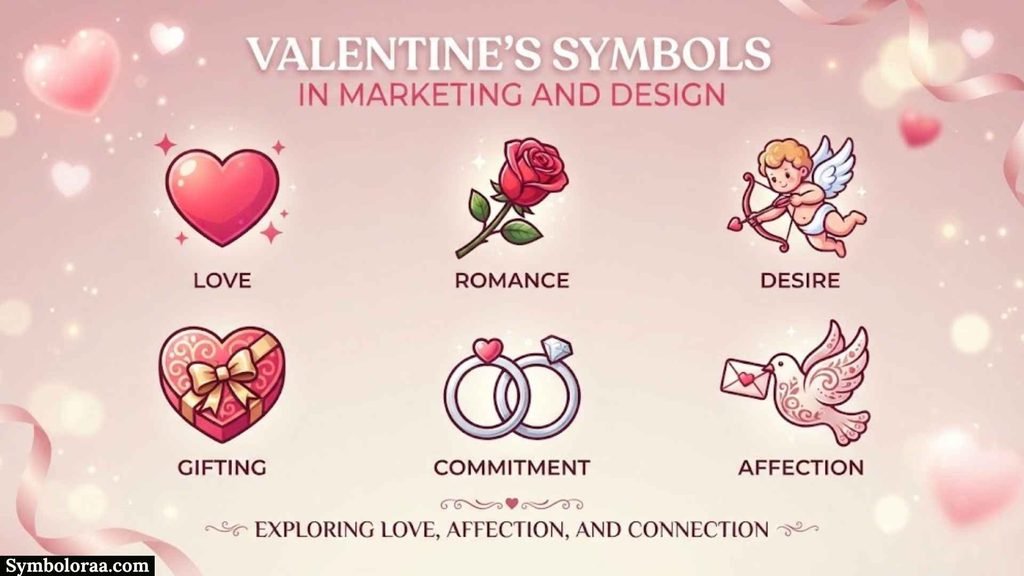
Valentine’s symbols are especially useful in visual communication because they can establish a theme almost instantly.
Businesses often use:
- Hearts
- Roses
- Red and pink colors
- Cupid
- Gift boxes
- Romantic typography
A restaurant might use a red heart and rose design for a Valentine’s dinner promotion.
A gift shop may combine hearts and ribbons with product photography.
A greeting-card company can use Cupid, flowers, and romantic phrases to communicate the purpose of a card before a customer reads the text.
Why Symbol Choice Matters in Design
The strongest visual symbol should match the intended emotional message.
For example:
- Romantic campaign: red heart + rose
- Cute campaign: pink heart + teddy bear
- Luxury campaign: elegant typography + deep red or purple
- Friendship campaign: bright colors + flowers + simple heart
This approach makes the design clearer and reduces the chance of sending an unintended message.
Key Takeaways About Valentine’s Symbols
- The heart is one of the most recognizable symbols of love.
- A red rose commonly communicates romantic love, passion, and devotion.
- Cupid represents romantic attraction and desire.
- A heart with an arrow suggests falling in love.
- A Valentine’s card represents the expression of affection through words and imagery.
- Chocolate is primarily a modern Valentine’s gift tradition.
- Lovebirds symbolize companionship and partnership.
- A ring can represent commitment, but it does not automatically mean engagement.
- A kiss represents romantic affection and intimacy.
- Two hearts can symbolize mutual love and connection.
- Red and pink are the strongest conventional Valentine’s colors.
- Valentine’s symbolism developed gradually through mythology, literature, courtship traditions, cards, flowers, gifts, and modern media.
- Not every love symbol is specifically a Valentine’s symbol.
- Valentine’s symbols can represent friendship and family affection as well as romance.
- Context is essential when interpreting any symbol.
Frequently Asked Questions About Valentine’s Symbols
What Is the Most Common Valentine’s Symbol?
The heart is one of the most widely recognized Valentine’s symbols. It commonly represents love, affection, care, and emotional connection.
What Does a Red Rose Mean on Valentine’s Day?
A red rose commonly represents romantic love, passion, devotion, and strong affection. The Library of Congress specifically notes the association between red roses and lovers on Valentine’s Day.
Why Is Cupid Associated With Valentine’s Day?
Cupid is a figure from Roman mythology associated with desire and love. His bow and arrows became familiar visual representations of romantic attraction and later became strongly associated with Valentine’s imagery.
What Does a Heart With an Arrow Mean?
A heart with an arrow commonly represents falling in love or being struck by romantic attraction.
What Do Two Hearts Mean?
Two hearts usually suggest mutual affection, shared love, emotional connection, or partnership.
Are Roses and Hearts the Same Type of Symbol?
No. Both can represent love, but their visual and cultural associations differ. A heart is a broad symbol of affection, while a red rose is more specifically associated with romantic love and passion.
Is Chocolate an Ancient Valentine’s Symbol?
Chocolate is better understood as a later Valentine’s gift tradition rather than an ancient symbol. Its connection with the holiday developed through modern gift-giving and commercial culture.
Can Valentine’s Symbols Represent Friendship?
Yes. Hearts, flowers, cards, chocolates, and other Valentine’s imagery can express friendship and appreciation when the surrounding message makes that intention clear.
What Color Is Most Associated With Valentine’s Day?
Red is the strongest conventional Valentine’s color, particularly because of its association with romantic love and passion. Pink is also widely used for tenderness and affection.
What Does a Valentine’s Ring Symbolize?
A ring can represent commitment, devotion, partnership, or lasting love. It does not automatically mean engagement because the meaning depends on the situation.
What Is the Difference Between Cupid and the Heart Symbol?
Cupid is more specifically associated with romantic attraction and desire, while the heart is a broader symbol of love and affection.
Why Are Valentine’s Cards So Important?
Cards provide a way to combine visual symbols with written expressions of affection. Historical collections show that Valentine’s cards were already using flowers, Cupid, poems, and sentimental imagery during the nineteenth century.
Are Valentine’s Symbols the Same in Every Culture?
No. Valentine’s Day customs and interpretations vary across cultures. Some symbols have become widespread internationally, but their emotional meanings and popularity can differ by region and tradition.
Conclusion
Valentine’s symbols create a visual language for love, affection, attraction, friendship, and commitment. The heart, red rose, Cupid, arrow, Valentine’s card, chocolate, lovebirds, kiss, and ring are among the most familiar examples.
Their meanings developed at different times. Cupid comes from classical mythology, flower symbolism has its own long cultural history, and Valentine’s cards became especially important as written and printed expressions of affection developed. Historical collections held by institutions such as the Library of Congress and British Library show how flowers, Cupid, poems, decorative artwork, and sentimental messages appeared in Valentine’s materials during the nineteenth century.
The most useful way to understand these symbols is to consider meaning, relationship, and context together. A red rose may communicate romantic love, while a pink heart may express gentle affection and a teddy bear may create a playful message. A ring can suggest commitment, while a Valentine’s card gives the sender space to explain exactly what the symbol means.
Whether you are choosing a gift, designing a card, creating jewelry, planning a Valentine’s campaign, writing a social media post, or simply trying to understand the meaning behind a symbol, the right choice depends on the message you want to communicate.

I’m Jackson Miller, an American author inspired by mystery, adventure, and the unpredictable nature of life. I enjoy writing fast-moving stories filled with memorable characters, unexpected choices, and meaningful moments. Through my books, I want readers to experience new worlds while discovering something about courage, determination, and themselves.
Three Books:
The Edge of Tomorrow
Under a Broken Sky
The Road We Chose
 Ethan Brooks
 Madison Reed